
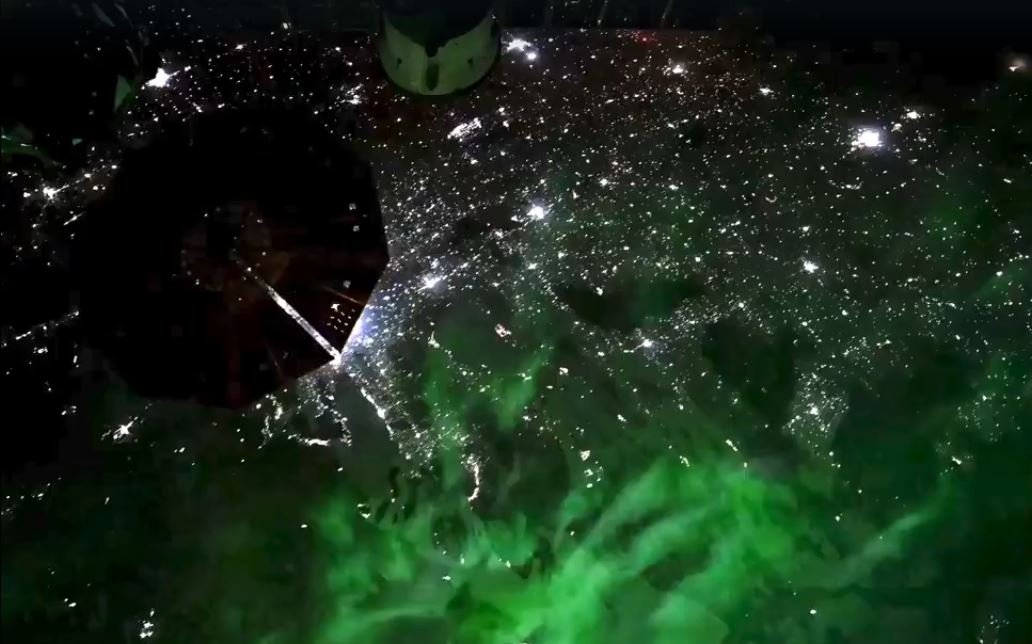


How the Aurora Forms
NASA describes the aurora as a mesmerizing natural light display caused by the Sun. The phenomenon occurs when charged particles from solar activity interact with Earth’s atmosphere, creating an awe-inspiring light show. These particles are funneled by Earth’s magnetic field toward the poles, where they collide with atmospheric gases like oxygen and nitrogen. This interaction produces the vibrant colors of the aurora. The aurora visible near the North Pole is known as the Aurora Borealis or Northern Lights, while the aurora seen near the South Pole is called the Aurora Australis or Southern Lights.
The colors of the aurora depend on the type of gas in the atmosphere and the altitude at which the particles collide. Green is the most common color, but the aurora can also appear in red, purple, yellow, and blue hues depending on various factors such as solar activity and atmospheric conditions.
Public Reaction to the Video
The video quickly gained attention, and people shared a variety of opinions. One user praised the video, saying, “So beautiful. Thanks for sharing,” while another skeptical viewer commented, “So fake!” A different user asked, “As always, amazing. I just want to ask if this has any impact on your equipment?” suggesting curiosity about the possible effects of the aurora on the astronaut’s instruments. Meanwhile, some viewers questioned the authenticity of the footage. One user wrote, “It looks like AI. The Aurora Borealis fluctuates and moves around. It’s not a static image that just flickers.”