

The study integrates official toll data, on-ground traffic counts, driver surveys, and real-world emissions testing – using an in-house portable emissions monitoring system known as Versatile Source Sampling System (VS3) – to build a validated, granular understanding of interstate truck movement and its pollution impact.
Air pollution in Delhi remains a persistent and life-threatening challenge, with the transport sector contributing approximately 18-24% of PM2.5 concentrations. Within this, freight vehicles—particularly heavy trucks—account for a disproportionate share ofemissions due to their diesel fuel use, ageing fleet profiles, and high operational intensity. Delhi’s status as a major logistics hub, with substantial interstate truck traffic daily, further compounds this challenge. Despite multiple policy measures being introducedover the years, the absence of reliable, granular data on interstate truck activity and real-world emissions has continued to constrain effective intervention.
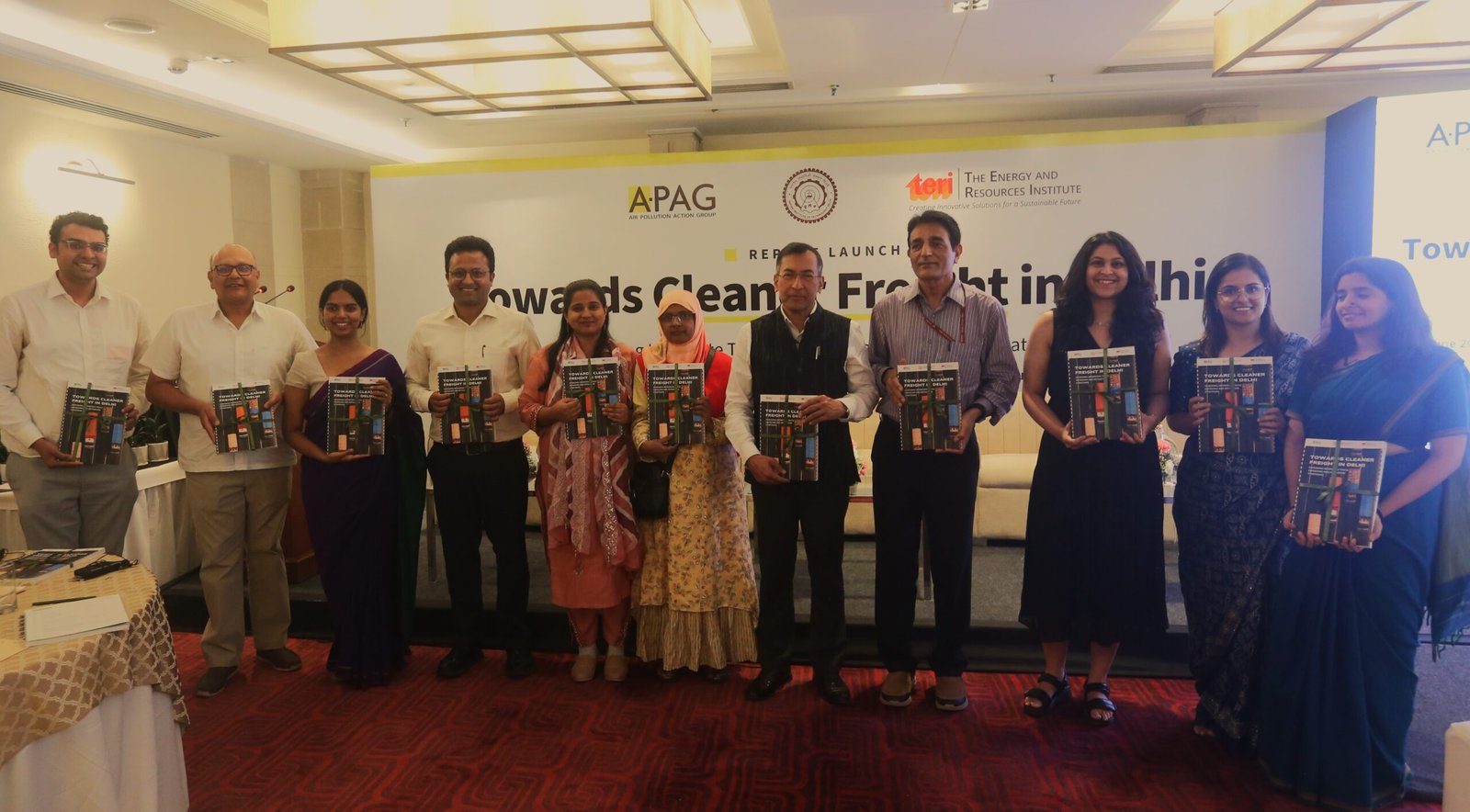
Kritika Choudhary, Head of Strategy at A-PAG, underscored the significance of the findings: “For the first time, we have a detailed, ground-truthed picture of Delhi’s interstate truck movement – revealing which routes, toll plazas, and peak hours contribute the most to emissions. Importantly, the report goes beyond diagnosis and identifies where interventions can be most effective, whichvehicles to prioritise, and the impact different measures could deliver. This provides a strong evidence base for targeted action at scale.”
The report finds that approximately 16,900 heavy-duty vehicles enter Delhi each day and characterises their fleet composition and operational patterns. Key findings include: HDVs account for 23% of total daily transport emissions and their share increases significantly to 61% during early morning and nighttime hours. It also identifies four toll plazas — Kundli, Rajokri, Badarpur, andTikri — that could influence over 50% of all truck entries into the city, among other findings.
Dr. Rahul Goel, Associate Professor at the Transportation Research and Injury Prevention (TRIP) Centre, IIT Delhi, noted the methodological rigour behind the findings: “This study is unique in that it combines real-world on-road emissions data with RFID toll records and large-scale driver surveys to build a bottom-up emissions inventory. It captures what trucks actually emit on Delhi’s roads, not just under test conditions.”
Emissions were measured using the Versatile Source Sampling System (VS3), an advanced mobile emissions monitoring platform developed in-house at IIT Delhi. Dr. Gazala Habib, who led the field measurement, said: “The VS3 was deployed onboard heavy-duty trucks operating under real-world driving conditions on Delhi’s roads, enabling simultaneous measurement of gaseous pollutants, black carbon, size-resolved particle mass and number concentrations, and aerosol scattering properties.” Across 45 on-road experiments, the study generated one of the most comprehensive real-world heavy-duty truck emissionsdatasets ever collected in India. Such high-resolution measurements are critical for developing evidence-based emission standards and improving the accuracy of emission inventories and air quality models.
The report translates this evidence into seven concrete mitigation strategies, each with timelines and quantified impact. For example, banning pre-BS-VI trucks by 2027 alone could cut PM2.5 emissions from interstate trucks by 51%. Recommended strategies include empty backhaul optimisation and shift to electric trucks, among several others.
In implementing these strategies, Dr. Anju Goel, Associate Director at TERI, emphasised the need for a regional approach: “Freightmovement does not respect city boundaries. The majority of trucks entering Delhi originate from and return to NCR states, meaningDelhi alone cannot solve this problem. The strategies identified in this report—from LEZ implementation to EV fleet transition—require coordinated action across the NCR. Policymakers at both the central and state levels need to align on a common, data-backed roadmap.”
Freight emissions in Delhi cannot be addressed through fragmented or city-level action alone. The evidence presented in thisreport offers a clear, actionable starting point; one that can inform targeted interventions in Delhi, be adapted for other cities facingsimilar freight challenges, and be extended to other under-examined segments. With a coordinated, data-driven policy approach that aligns regulations, enforcement, and incentives across NCR jurisdictions, meaningful and lasting improvements in Delhi’s air quality are achievable.