
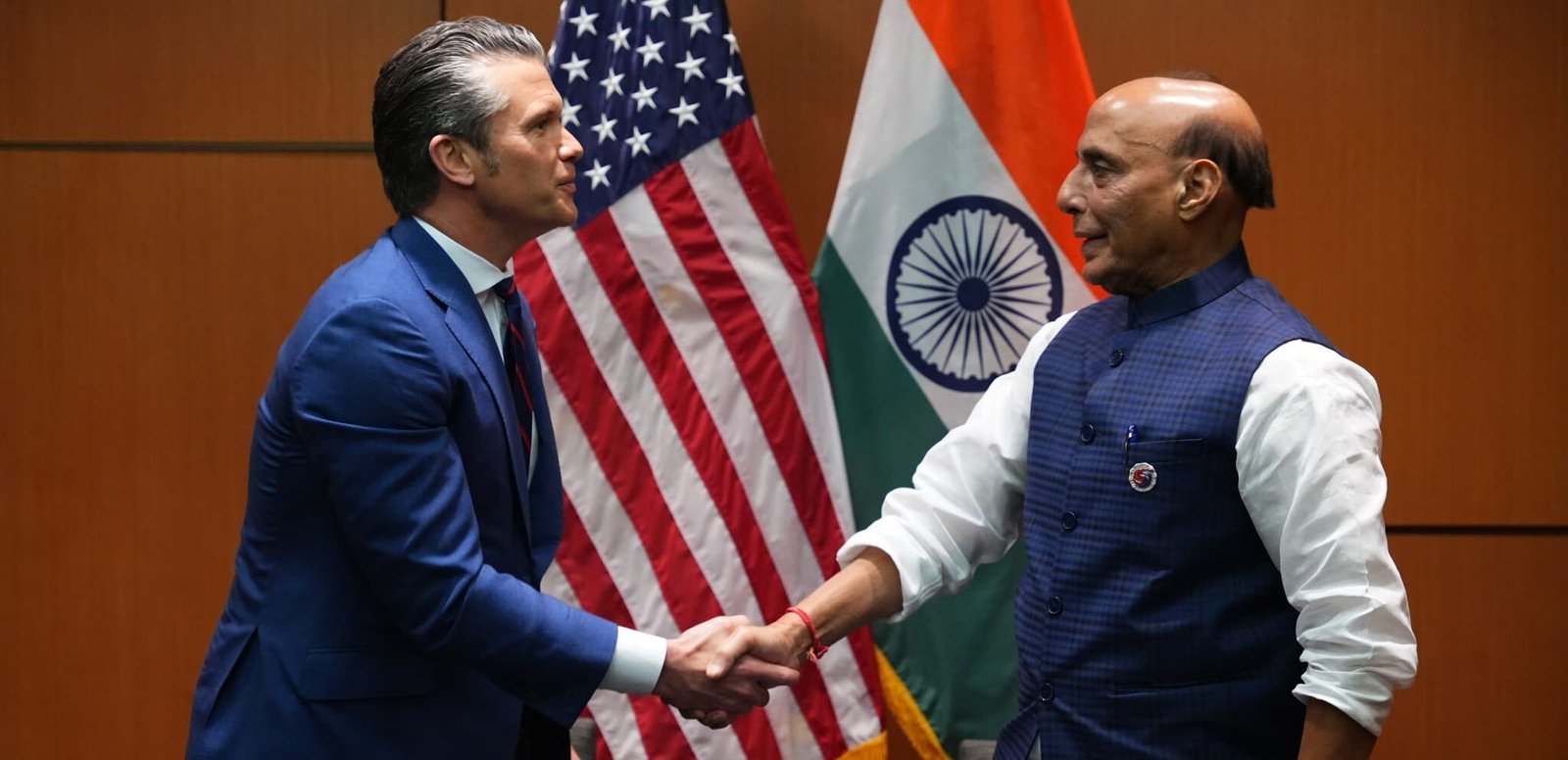


A Strategic Lifeline Amid Trade Turbulence
The deal comes at a delicate moment in U.S.–India relations. In an era of “America First” and resurgent protectionism, Washington’s steep tariff hikes on Indian exports — from pharmaceuticals to auto components — have strained what was once a fast-growing trade partnership. New Delhi responded with reciprocal levies, prompting murmurs of a “diplomatic chill.”
Yet this defence pact carves out a crucial exception. By ring-fencing strategic cooperation from trade disputes, both nations signal that security imperatives outweigh economic irritants. The framework outlines a decade of joint military exercises, co-development of defence technologies and real-time intelligence sharing — from advanced drones and cybersecurity systems to next-generation munitions.
For India, it offers a chance to leapfrog technology gaps and unlock projects like the Tejas Mk2 fighter and BrahMos upgrades through smoother access to American know-how. In a sense, the pact offers India a way to leapfrog its defense bottlenecks while simultaneously building capacity at home. For the U.S., it ensures a trusted partner in the Indo-Pacific without compromising its industrial interests. By keeping defence collaboration insulated from tariff battles, Washington hints at selective waivers in strategically sensitive sectors — including India’s Chabahar Port operations, vital to counter China’s footprint in the Indian Ocean.
The Russia Equation: Breaking Dependence, Not Relations
India’s defence inventory remains 60–70% Russian-origin — from Su-30 MKIs and T-90 tanks to the S-400 air defence systems. But Moscow’s deepening isolation after the Ukraine war and tightening U.S. sanctions have exposed the fragility of this dependence. Spare parts, maintenance delays, modernization pipelines and payment bottlenecks have turned reliability into risk.
The new pact offers India a graceful off-ramp, allowing diversification without abrupt disengagement. Deeper U.S. collaboration helps India strengthen local manufacturing while gradually reducing reliance on Russian supplies. To its credit, Washington has shown strategic patience, recognising that pushing India to sever Moscow ties too quickly could backfire — driving New Delhi closer to Beijing instead.
India’s approach is pragmatic. It is not abandoning Russia; it is rebalancing. This diversification aligns with its long-held doctrine of strategic autonomy — engaging all powers without becoming beholden to any. Over time, it will give India greater leverage in shaping its own defence ecosystem.
China: The Dragon Behind the Curtain
Behind the high diplomacy lies the unmistakable driver — China. From border tensions in Ladakh to Beijing’s “String of Pearls” strategy across the Indian Ocean, India has faced an assertive neighbour testing its limits on multiple fronts.
For the U.S., India remains the democratic counterweight central to its Indo-Pacific strategy. The pact boosts deterrence through joint maritime patrols, satellite-based intelligence sharing and co-production of precision weapons, reinforcing India’s capability to counter the PLA Navy and secure sea lanes vital to global trade. It aligns with the Quad’s vision — positioning India as a net security provider and the southern anchor of the Indo-Pacific arc.
As Washington manages its uneasy truce with Beijing, India’s role becomes even more pivotal. A stronger, better-equipped India strengthens the regional security architecture, while giving Washington a credible partner that shares its goal of a free and open Indo-Pacific. For New Delhi, it is both shield and opportunity — protection against aggression and a platform to project influence as a net security provider. This is also a strategic multiplier: access to cutting-edge defense technologies and real-time intelligence to counter China’s growing footprint — not just in the Himalayas but across the Indian Ocean and the South China Sea.
Tariffs and Technology: The Tightrope of Trust
Even as strategic trust deepens, economic interests remain prickly. India’s insistence on “Make in India and Atmanirbhar Bharat” — manufacturing and co-developing defense hardware locally — often collides with America’s guarded approach to sharing proprietary technology. The U.S. fears intellectual property loss; India insists that true partnership demands co-development, not mere sales.
The co-production of GE F414 jet engines for India’s Tejas Mk2 fighters stands as a rare breakthrough — a template for future collaboration under the Initiative on Critical and Emerging Technology (iCET). Yet bureaucratic caution in Washington and procedural delays in New Delhi continue to test the partnership’s pace.
For success, both sides must adapt: the U.S. by loosening technology export restrictions and India by streamlining procurement and offering regulatory predictability to American investors and defence firms.
From Buyer to Builder: India’s Strategic Payoff
Strip away the rhetoric, and the ultimate beneficiary of this defense embrace is India. This pact seamlessly aligns with Atmanirbhar Bharat, pushing India from being the world’s largest arms importer to becoming a credible co-developer and future exporter. Analysts estimate it could cut import dependence by nearly 30% within a decade and unlock billions in local production and employment.
Strategically, it cements India’s role as a pivotal Indo-Pacific power — a balancing force between great powers, not a pawn of any — courted by Washington, cautious with Moscow and confident against Beijing. Economically, it offsets tariff turbulence by opening new corridors of cooperation, from cybersecurity to maritime domain awareness. Diplomatically, it signals that India can partner deeply with the U.S. without abandoning its historic ties with Russia or its policy of strategic autonomy.
Pragmatism Over Polarity
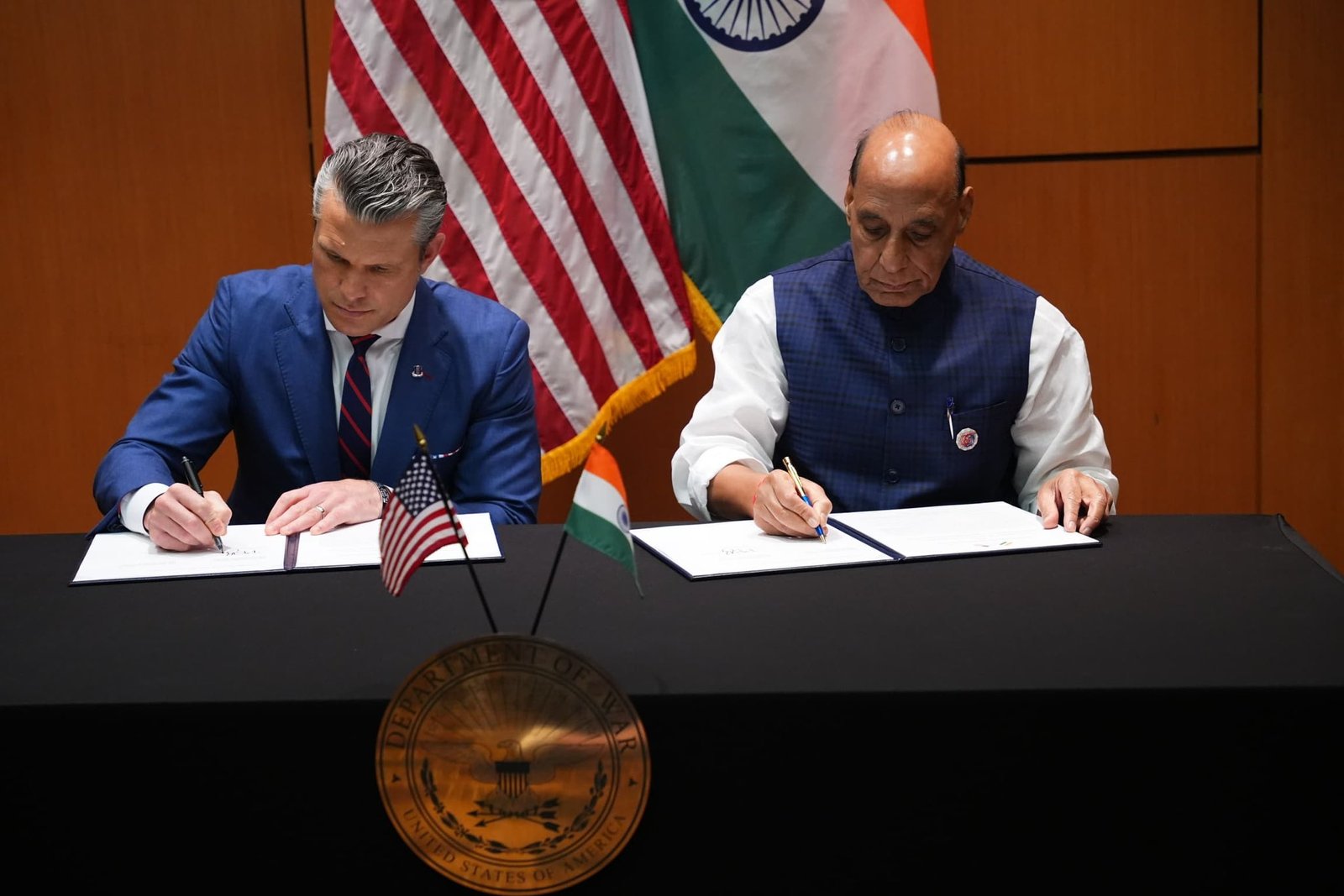
The Kuala Lumpur agreement is more than a defence document — it is a statement of intent for a multipolar era. For Washington, it secures a reliable partner in Asia amid growing Chinese influence. For New Delhi, it represents both opportunity and affirmation — a leap toward capability, self-reliance and recognition.
Critics may worry about sovereignty clauses or technology strings, but the writing is clear: India is rising not by aligning, but by asserting — building strength through balanced partnerships.
As the ink dries on this historic pact, one truth stands out: in a world of tariffs, tech and trust deficits, India is learning to build power on its own terms — and the world is taking notice.
About the Author

Mr. Hridaya Mohan is a regular Columnist with a renowned Indian daily “The Hitavada” and some other newspapers / magazines internationally. Superannuated as Executive Director, Steel Authority of India Ltd. (SAIL), he is Senior Adviser, Metallon Holdings Pvt. Ltd. presently. He headed SAIL office at Beijing as Chief Representative (China & Mongolia) for six years. He has published and presented seventeen papers globally. Recipient of “Sir M Visvesvaraya Gold Medal”for one of his papers, “Benchmarking of Maintenance Practices in Steel Industry” from The Institution of Engineers (India), he was awarded with “Scroll of Honour” for the excellent contributions to Engineering fraternity from IE(I), Bhilai, “Jawahar Award” for leadership excellence in SAIL and “Supply Chain Leader – 2017” award from IIMM.