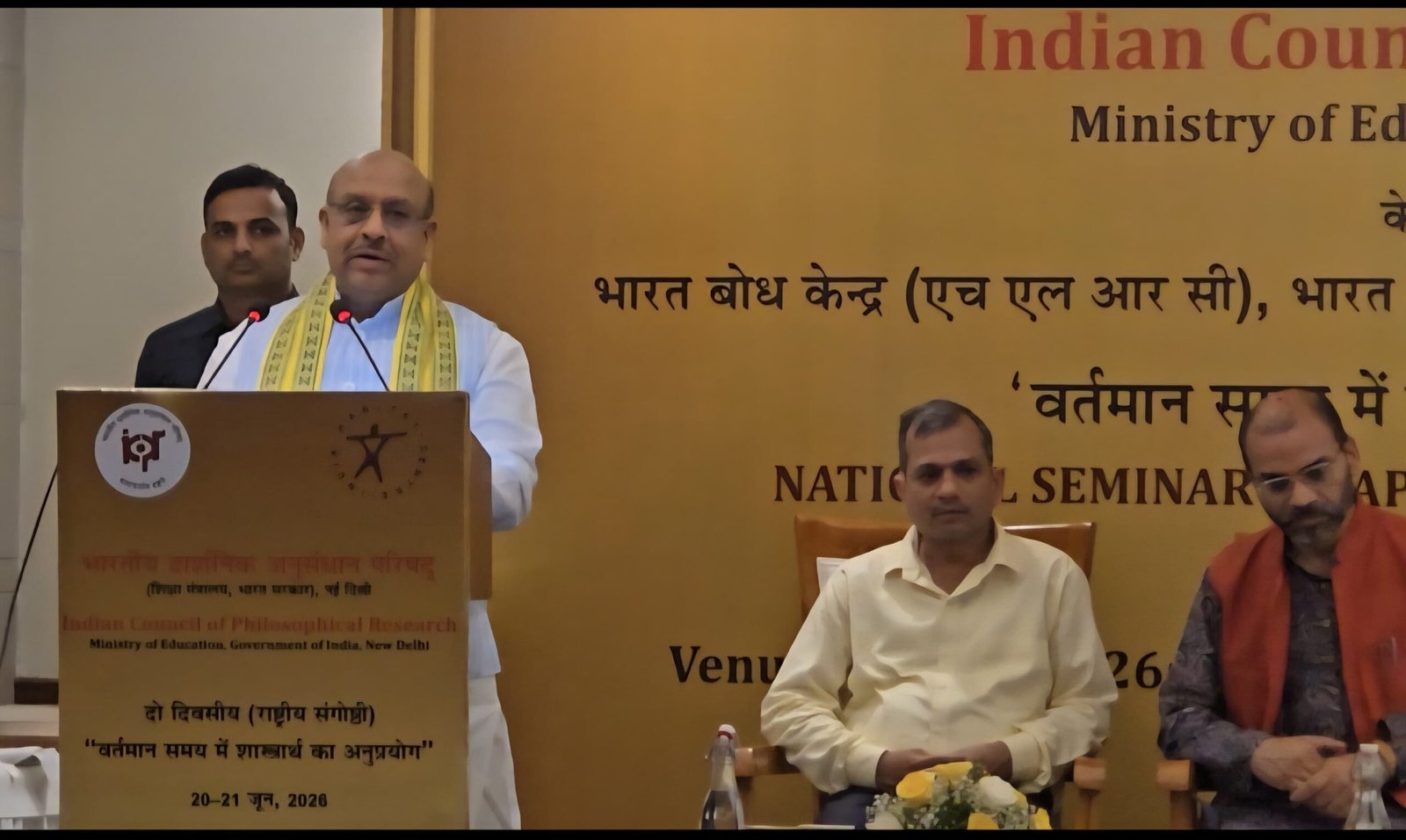


Speaking as the Chief Guest at the inaugural session, Shri Vijender Gupta, Speaker of the Delhi Legislative Assembly, said that Shastrartha is the soul of the Indian knowledge system. The session was attended by Prof. Ramesh Kumar Pandey, All India President of Sanskrit Bharati, as the Guest of Honour, while Prof. Sachchidanand Mishra, Member Secretary of ICPR, presided over the event.
Addressing the gathering, Vijender Gupta said that Shastrartha has always been highly valued in Indian civilization because it gives birth to creative ideas. He expressed concern that in today’s information age, people’s ability to listen is gradually declining, which can be harmful to a healthy society. He added that debates held in legislative assemblies are a modern form of Shastrartha. Respectful, objective, and fact-based dialogue can help solve many social problems. Discussions based on logic and evidence strengthen democracy and contribute to nation-building. He remarked that even defeat in a Shastrartha is a form of victory because both sides gain knowledge and understanding.
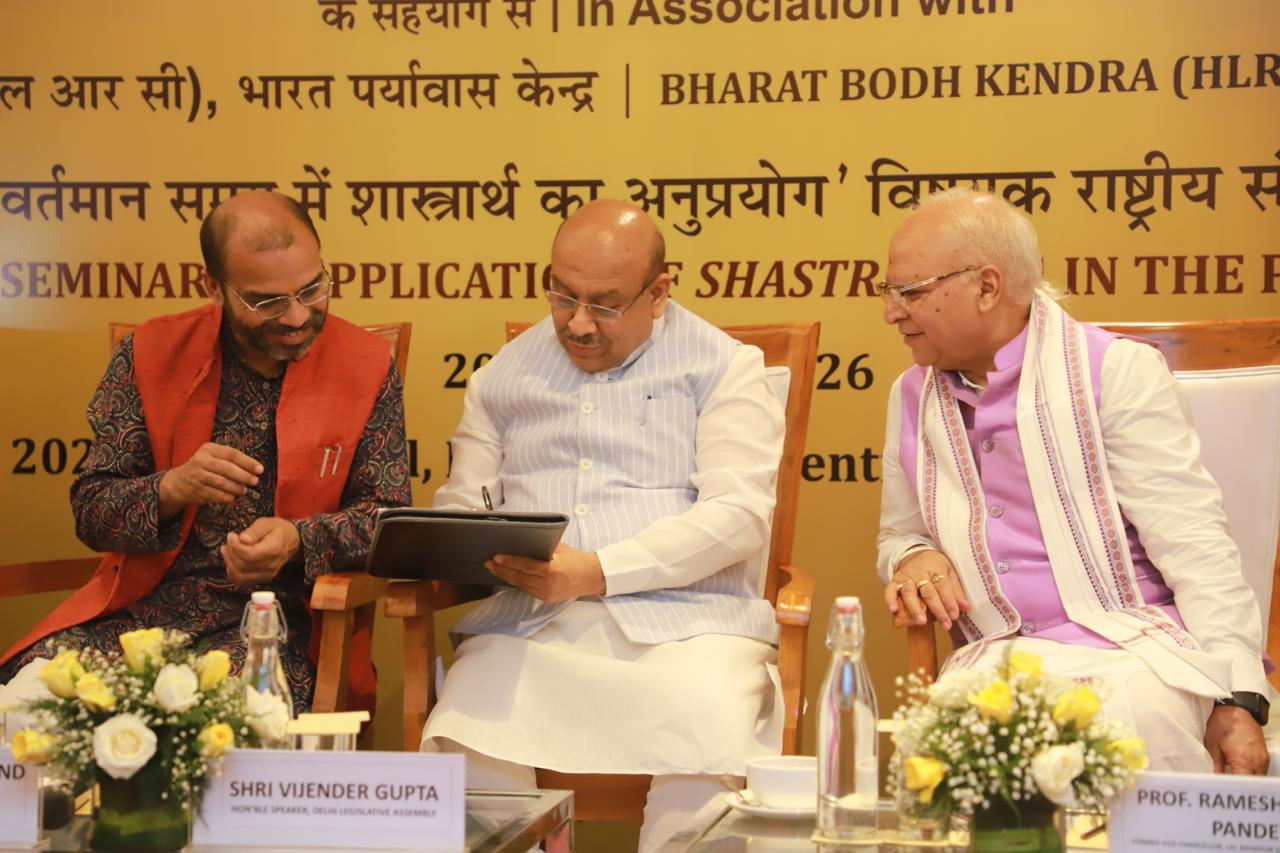
Guest of Honour Prof. Ramesh Kumar Pandey stated that Shastrartha has always inspired curiosity. It promotes healthy dialogue rather than conflict. The purpose of Shastrartha is to refine and elevate ideas. He emphasized that Shastrartha is as important as the scriptures themselves. The National Education Policy- 2020 has created opportunities to study and understand Indian Knowledge Systems. He observed that meaningful debate is impossible without sound reasoning and noted that today’s society often witnesses misleading arguments instead of genuine logic. According to him, humility and openness are essential for acquiring knowledge.
Welcoming the guests, Prof. Sachchidanand Mishra, Member Secretary of ICPR, said that the seminar would give new direction to the meaningful tradition of Shastrartha. He highlighted its importance in the Indianisation of knowledge. He noted that India has a long history of dialogue and discussion and that democracy must provide opportunities for debate and conversation. Collective dialogue, he said, is essential for advancing knowledge. Shastrartha is not limited to any one discipline; it is found in fields such as logic, grammar, and literature. He further remarked that dialogue remains the best solution to conflicts around the world.
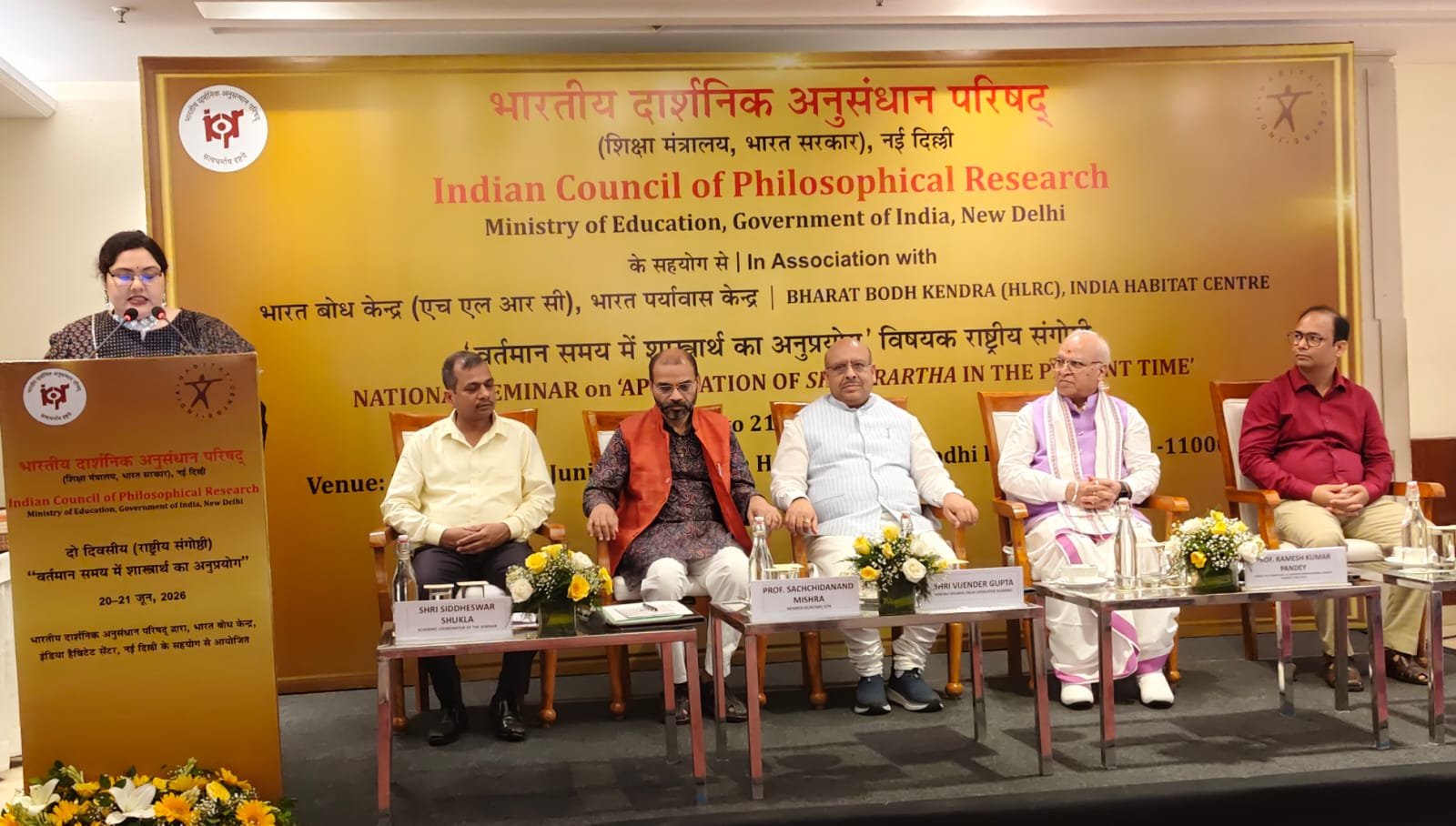
Seminar Convener Siddheshwar Shukla said that Indian culture has always encouraged questioning. The tradition of healthy intellectual debate has existed since ancient times and finds mention in Vedic literature, the Upanishads, and other texts related to the Indian knowledge system. According to him, Shastrartha has the power to reveal truth.
Dr. Amit Yadav stated that Shastrartha plays an important role in promoting public welfare. He said that the National Education Policy (NEP) 2020 emphasizes reconnecting with India’s roots, and this seminar is an effort in that direction.
The inaugural session was moderated by Dr. Yogita Sharma, while the vote of thanks was delivered by Devendra Kumar Jatav. The seminar also featured several thematic technical sessions. In the first technical session which professors and research scholars of various prestigious universities shared their views and presented research papers.