
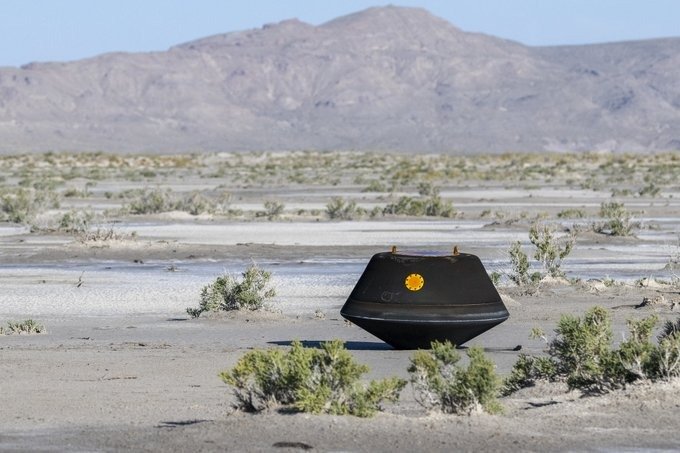


The samples of Bennu were brought to Earth by NASA’s spacecraft in 2023, and after this scientists have identified nitrogen, minerals and thousands of organic compounds in these samples. It also include nucleobases (building blocks of DNA), and amino acids (help make proteins). Even, the presence of these essential molecules suggests that Bennu may contain the chemicals necessary for life.
Presence of Water!
Minerals and salts have been detected in the samples, which suggests that there may have been water on Bennu at some point. The presence of water and the presence of chemicals such as ammonia strengthen the idea that asteroids may have helped in the formation of life by bringing water and organic matter to Earth in the early times.
Difficult to draw conclusions
Nikki Fox, associate administrator of NASA’s Science Mission Directorate, said, “Asteroids play an important role in understanding the history of our home planet. Bennu’s samples help us understand what elements were present in the solar system before life began on Earth.” Although these findings do not prove that there was ever life on Bennu, they support the idea that when asteroids collided with Earth billions of years ago, they may have brought the components necessary for life to Earth. Professor Sarah Russell, a cosmic mineralogist at the Natural History Museum in London, said: “This gives us vital information about our origins and helps us answer big questions about how life began.” Scientists believe these organic molecules could have reached other planets, potentially providing early signs of life in other parts of our solar system