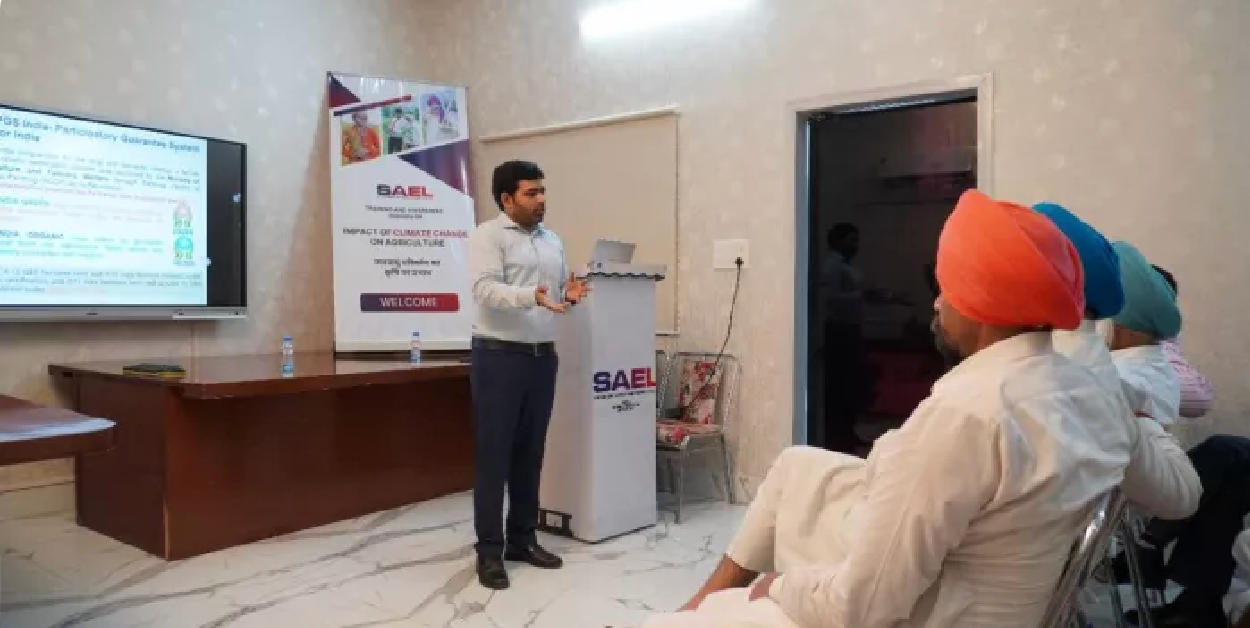


Led by Dr. Navish Kataria, professor of Environmental Sciences from J.C. Bose University of Science and Technology (Faridabad), the sessions were focused on equipping farmers with practical knowledge for adopting sustainable farming methods such as organic farming. The trainings were aimed at addressing local challenges such as stubble burning, soil degradation, and water scarcity. Farmers were also introduced to new income generation opportunities through agri-waste management.
Through these interactive and solution-driven sessions, farmers were encouraged to share their experiences and ask questions on receiving certifications to sell their farm products in national and international markets. They were made aware of sustainable stubble management techniques to reduce air pollution, organic farming methods for healthier soil and crops, water conservation practices, and vermicomposting and agri-waste management to generate additional income.
The initiative aims to help farmers improve soil and air quality, reduce input costs, increase farm profitability, open new revenue streams from agri-waste utilization, and develop greater resilience against climate change.
“At SAEL, our commitment to the farming community runs deep—they are the backbone of our ecosystem and a vital force in our journey toward sustainable progress. We believe that true development must uplift society while preserving the environment, and we are determined to play our part in mitigating the impact of climate change. By continuing to collaborate closely with farmers, we aim to build resilient partnerships that drive inclusive growth and long-term sustainability” said Sukhbir Singh, Director, SAEL Industries Limited.
As a response to the significant environmental and economic challenges faced by farmers in Punjab, Haryana, and Rajasthan, the initiative highlighted the need for accessible, expert-led education on sustainable agriculture to improve soil health, reduce pollution, and enhance livelihoods.
This programme is part of SAEL’s broader commitment to supporting rural communities, promoting clean energy, and contributing to sustainable development by investing in farmer education.