

New Delhi (Hridaya Mohan): The widening conflict in West Asia is no longer a distant war. From oil prices to shipping routes and the safety of millions of Indians in the Gulf, the crisis carries far-reaching implications for India’s economy and strategic autonomy.
The escalating confrontation in West Asia is not merely a distant geopolitical drama. For countries deeply connected to the region, it represents an unfolding strategic shock with immediate economic and diplomatic consequences. For India in particular, the crisis carries profound implications—touching energy security, trade routes, diaspora safety and strategic diplomacy.
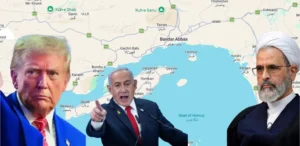
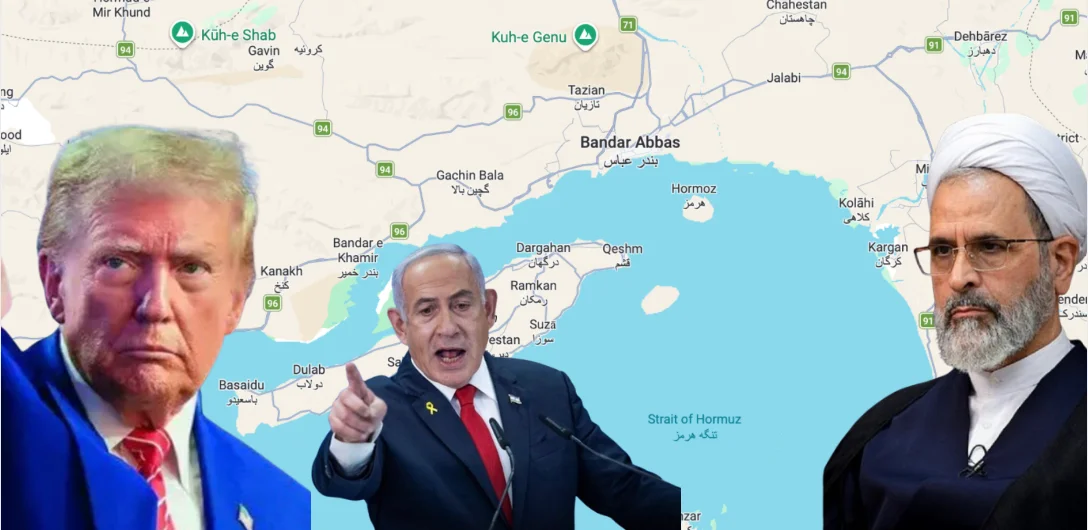
The latest escalation involving Israel, Iran and the involvement of the United States has heightened fears of a wider regional confrontation. At a time when the global economy is already grappling with fragile supply chains, persistent inflation and geopolitical fragmentation, instability in West Asia risks sending shockwaves across markets and strategic alignments.
For India, whose economic and human connections with the region run deep, the stakes could hardly be higher.
Energy: The Immediate Vulnerability
The most immediate risk lies in energy security. India imports more than 85 percent of its crude oil requirements and a substantial share of these supplies passes through the strategically vital Strait of Hormuz—one of the world’s most critical energy corridors.
Any disruption in this narrow waterway has global consequences. Nearly a fifth of the world’s oil trade moves through the strait and even the perception of insecurity can send prices soaring. For India, rising crude prices quickly translate into a heavier import bill, pressure on the current account deficit and higher domestic inflation.
Energy-intensive sectors—from steel and petrochemicals to aviation and logistics—feel the impact almost immediately. Higher fuel costs ripple through production chains, raising transportation costs and eventually pushing up prices of essential commodities.
Although India has diversified its oil suppliers in recent years—importing from countries as varied as Russia, Saudi Arabia and United Arab Emirates—global energy markets remain tightly interconnected. A major disruption in West Asia inevitably affects prices everywhere.
Trade Routes and Supply Chains at Risk
The crisis is not only about oil. West Asia sits at the crossroads of some of the world’s busiest maritime trade routes linking Asia, Europe and Africa. Escalating tensions threaten shipping flows across nearby corridors including the Red Sea and the Persian Gulf.
Any disruption in these sea lanes forces vessels to take longer detours, increasing freight costs and delaying deliveries. The experience of recent attacks on commercial shipping in the region showed how quickly global logistics networks can be disrupted.
For Indian exporters, particularly those targeting European markets, such developments could erode competitiveness. Higher shipping costs and longer transit times may affect sectors ranging from textiles and engineering goods to agricultural exports.
West Asia is also a major trading partner in its own right. Bilateral trade between India and Gulf countries runs into hundreds of billions of dollars annually. The region functions not only as an energy supplier but also as a critical commercial hub connecting India to global markets.
The Human Dimension
Beyond economics lies a significant human dimension. Nearly nine million Indians live and work across Gulf countries such as United Arab Emirates, Saudi Arabia, Qatar and Kuwait.
This diaspora forms a vital economic and social bridge between India and the region. Remittances from the Gulf contribute tens of billions of dollars annually to India’s foreign exchange inflows and support household incomes across several Indian states.
In times of crisis, however, the safety of overseas citizens becomes a central concern. Past conflicts in the region have required large evacuation operations involving complex logistical coordination.
A prolonged conflict could also weaken labour markets in the Gulf, affecting employment opportunities for migrant workers and potentially reducing remittance flows—an outcome that would have ripple effects on India’s domestic economy.
India’s Delicate Diplomatic Balance
India’s diplomatic engagement with West Asia has historically been guided by careful balancing. It maintains a strong strategic partnership with Israel in defence technology, agriculture and innovation, while also sustaining long-standing civilisational and economic ties with Iran and the Arab Gulf states.
This multi-vector diplomacy has allowed India to engage constructively with diverse actors in the region while avoiding entanglement in regional rivalries. Yet rising geopolitical polarisation is making such balancing increasingly complex.
At the same time, West Asia is central to emerging connectivity initiatives linking Asia and Europe. Projects such as the India–Middle East–Europe Economic Corridor aim to transform trade and infrastructure connectivity across the region. Escalating conflict could slow or derail such initiatives that are critical to future economic integration.
Strategic Lessons for India
The unfolding crisis underscores a broader lesson: energy security and supply chain resilience are now inseparable from national security.
India will need to accelerate efforts to diversify its energy sources, expand strategic petroleum reserves and strengthen renewable energy capacity. Reducing structural dependence on imported hydrocarbons remains essential for long-term stability.
Equally important is strengthening supply chain resilience for sectors dependent on external energy flows—such as fertilisers, manufacturing inputs and transport logistics.
Diplomatically, India must continue advocating de-escalation and dialogue through multilateral platforms such as BRICS and the United Nations while maintaining open channels with all key actors in the region.
A Test of Strategic Autonomy
The crisis in West Asia illustrates how rapidly regional conflicts can trigger global economic consequences. Energy markets, shipping routes and financial stability are all vulnerable to geopolitical shocks.
For India, the immediate challenge is to safeguard its core interests—energy security, uninterrupted trade flows and the safety of millions of its citizens working across the Gulf. The unfolding developments therefore represent more than a regional disturbance; they test India’s ability to manage competing relationships while protecting national interests in an increasingly uncertain global environment.
More fundamentally, the crisis underlines how deeply India’s economic stability is intertwined with developments in West Asia. The region remains central to India’s energy lifelines, commercial networks and overseas workforce. Responding effectively will require foresight, diversification of energy sources and supply chains and sustained diplomatic engagement with all sides. In a world marked by growing geopolitical fractures, India’s real strategic task will be to convert vulnerability into resilience and uncertainty into opportunity.
About the Author

Hridaya Mohan is a regular Columnist with a renowned Indian daily “The Hitavada”, ‘Bharat Neeti’ and some other newspapers/magazines internationally. Superannuated as Executive Director, Steel Authority of India Ltd. (SAIL), he is Senior Adviser, Metallon Holdings Pvt. Ltd. presently. He headed SAIL office at Beijing as Chief Representative (China & Mongolia) for six years. He has published and presented seventeen papers globally. Recipient of “Sir M Visvesvaraya Gold Medal” for one of his papers, “Benchmarking of Maintenance Practices in Steel Industry” from The Institution of Engineers (India), he was awarded with “Scroll of Honour” for the excellent contributions to Engineering fraternity from IE(I), Bhilai, “Jawahar Award” for leadership excellence in SAIL and “Supply Chain Leader – 2017” award from IIMM.