
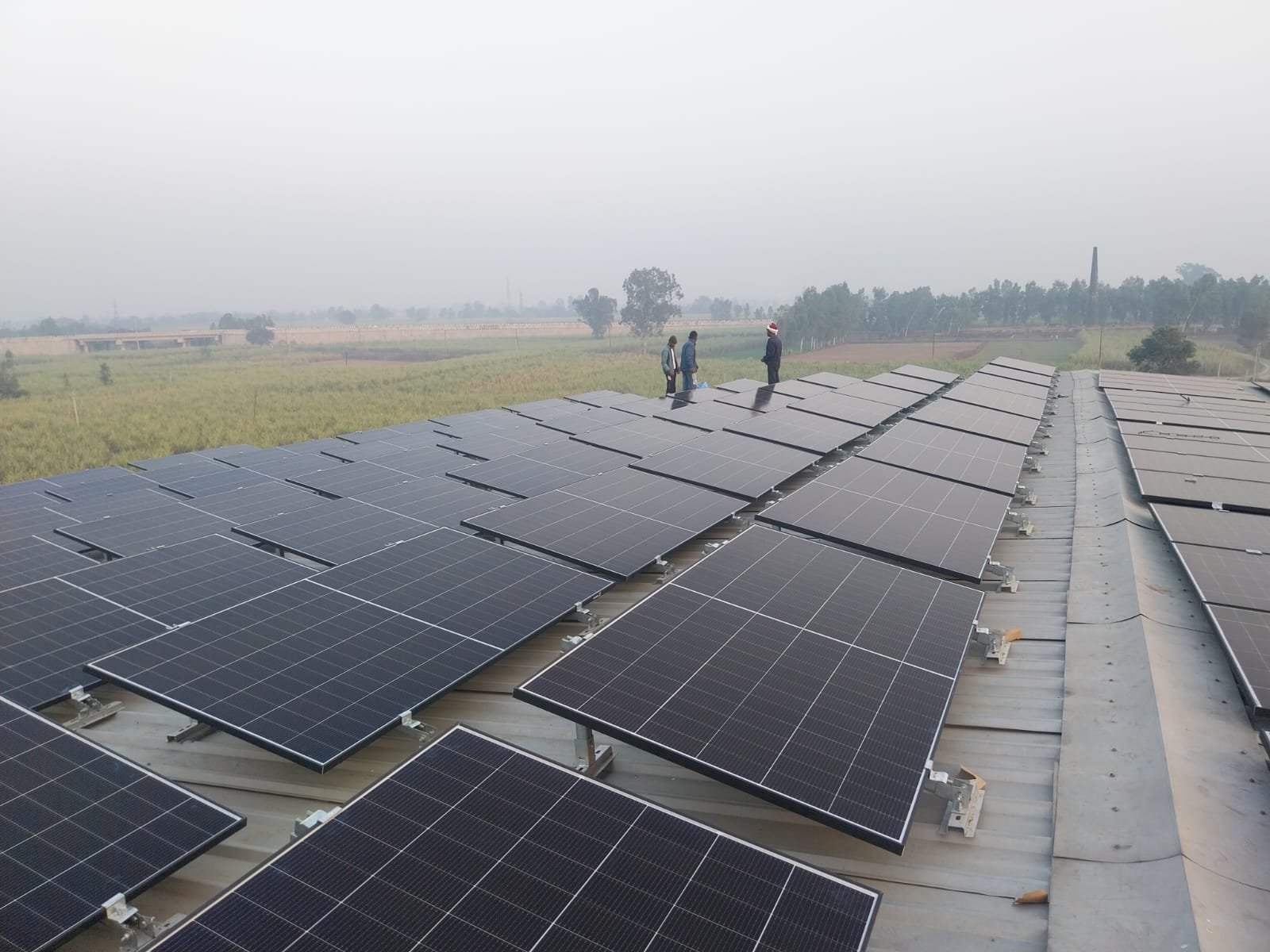


New Delhi: Addressing the Bihar’s electricity regulator, the Bihar Electricity Regulatory Commission (BERC), Time-of-Day (ToD) pricing for over 8.7 million smart prepaid meter households across the state, Loom Solar (Loom), one of India’s leading solar technology manufacturers, has responded with a purpose-built solution: the Fusion Hybrid Inverter paired with the CAML LiFePO4 Battery Energy Storage System.
Under this ToD framework, power consumed between 9 AM and 5 PM is billed at 20% below the standard rate, while electricity drawn between 5 PM and 11 PM is billed at a 10% premium. The off-peak window from 11 PM to 9 AM is priced at ₹7.42 per unit — making it the most cost-effective period for battery charging from the grid. Working in tandem, Loom’s two products charge the battery using rooftop solar panels during the day and automatically supply stored power to the home during peak-price evening hours — substantially reducing what households draw from the grid precisely when it costs the most. The Fusion Hybrid Inverter is equipped with a Time of Use (ToU) scheduling feature that allows residential or commercial & industrial (C&I) or utility scale applications to programme charge and discharge cycles in alignment with BERC’s ToD schedule. Rather than relying on manual switching, the system intelligently draws from the grid during the cheapest off-peak window and discharges stored energy during the expensive evening peak — fully automating the arbitrage without any intervention from the user.
“Bihar’s ToD tariff is not a burden — it is an opportunity. It tells every smart meter household exactly when electricity is cheap and when it is expensive. Our Fusion Hybrid Inverter and CAML battery system reads that signal and acts on it automatically, turning the tariff gap into daily household savings,” said Amod Anand, Co-Founder and Director, Loom Solar.
The financial case is straightforward. A household that shifts five units of evening consumption to stored solar power can save up to ₹1,500 per month. Where the battery is charged from cheaper daytime grid power rather than solar, savings of approximately ₹330 per month are still achievable — every month, without any change in how the family uses electricity. The system handles the optimisation automatically.
As one of India’s foremost BESS manufacturers and a recognised BESS developer, Loom Solar offers its Battery Energy Storage System (BESS) product range from 1 kWh to 5 MWh, covering Residential, Commercial & Industrial (C&I), and Utility-scale applications. The same storage battery and hybrid inverter technology that protects Bihar households from peak-hour tariffs is engineered to scale — from a single home to an industrial facility or a grid-connected utility project. This breadth of deployment capability positions Loom Solar as a full-spectrum energy storage partner for India’s transition to a smarter, more resilient grid.
The CAML battery’s LiFePO4 chemistry is rated for 6,000 charge cycles at 80 per cent depth of discharge, giving it a working life of ten to fifteen years — the sustained daily cycling that consistent ToD arbitrage requires. Its IP65 rating ensures reliable performance through Bihar’s hot summers and humid monsoon months. The Fusion Hybrid Inverter is designed not merely to convert power, but to function as a financial controller for the household’s energy, making charge and discharge decisions based on tariff timing.
Loom Solar systems are fully eligible under the Government of India’s PM Surya Ghar Muft Bijli Yojana, which provides central subsidies of up to ₹78,000 on qualifying rooftop solar installations. With the subsidy reducing the upfront investment, most households can recover the incremental cost of a hybrid setup over a conventional on-grid system within three to four years — after which the system delivers pure financial returns for a decade or more.