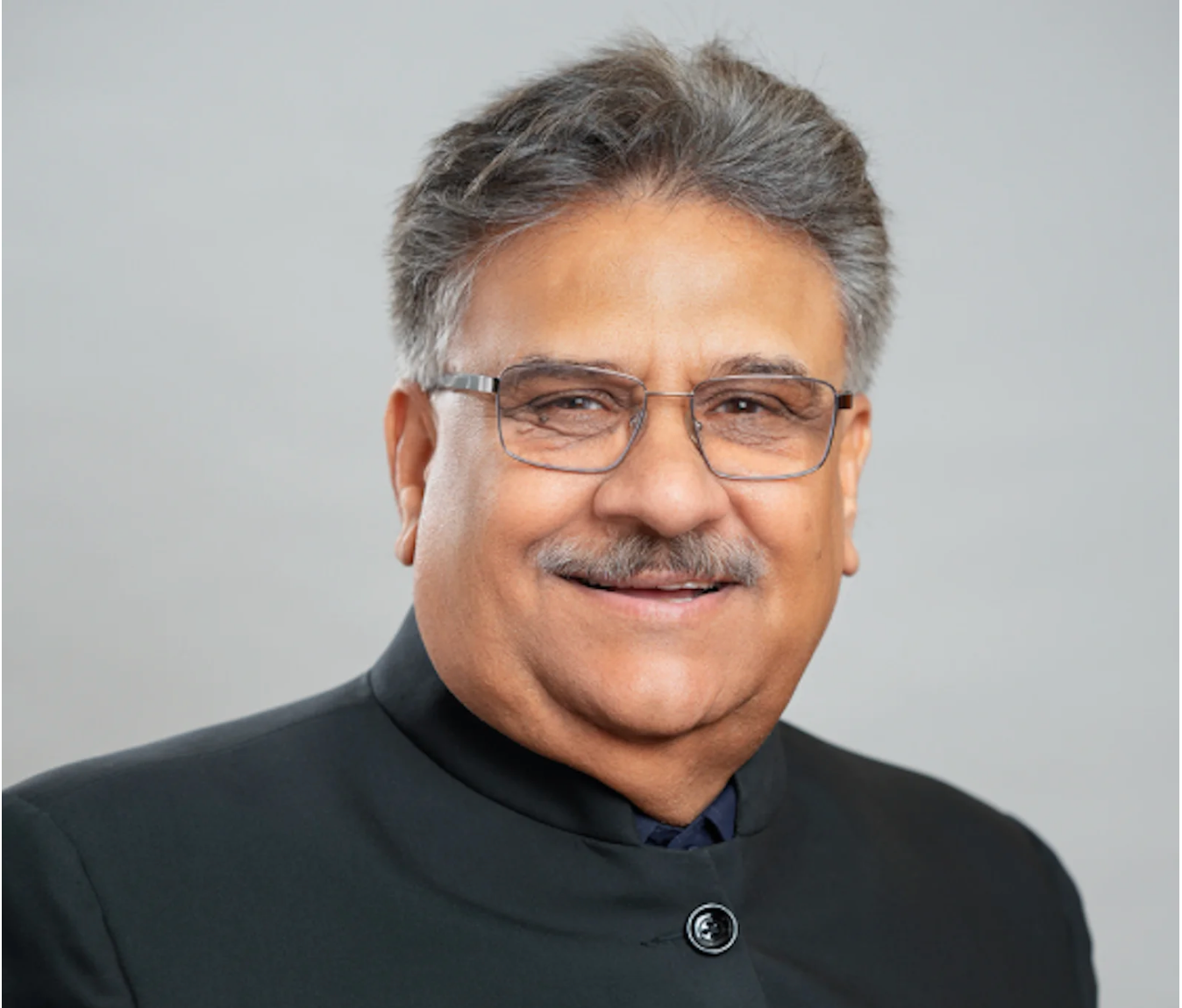
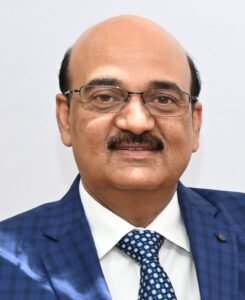
New Delhi (Shekhar Suman Sinha/Dikshant Suryavanshi): Former Diplomat and NTPC’s Independent Director Anil Kumar Trigunayat on Friday said, “India has been urging freedom of navigation and is against closure of Strait of Hormuz or any other SLOC.” In an exclusive interview with Bharat Neeti News (BNN), he also highlighted India’s ‘4Ds and 4Es’ policy in the Middle East.
Anil Kumar Trigunayat has served as India’s Ambassador to Jordan, Libya, and Malta. He is currently a Distinguished Fellow at the Vivekananda International Foundation (VIF), where he heads the West Asia Experts Group. His areas of expertise include West Asia, Africa, Russia, and advancing India’s interests in conflict zones. He has also edited books such as Evolving Security Dynamics in West Asia and India’s Challenges, published by VIF, and West Asian Dynamics and Indian Imperative, published by How Academics in 2024.
Read the full interview here:
Question: Why has India missed the opportunity to play a coordinating role in peace-building efforts in the Middle East, while Pakistan has been able to capitalize on this space? In this context, what strategic steps should India take moving forward?
.
.
Answer: in my view India has not missed any opportunity to be a credible interlocutor. The primary job of any and our foreign policy is to serve our national interests first . India has pursued a policy of 4Ds in the Middle East /West Asia which are our extended and existential neighbourhood . These under PM Modi include Dialogue ,Diplomacy ,Dehyphenation and Deescalation . Early on India reiterated respect for sovereignty and territorial integrity and urged all sides to return to the table and resolve issues through dialogue and diplomacy .India has very high stakes in the region essentially marked by 4Es I.e. Energy and Fertiliser Security ;Extensive Economic Engagement ;Expats nearly 10 mn whose safety and security and welfare remain paramount and finally Ease of Navigation as our 80 85% trade traverses through the Sea Lanes of Communications including Strait of Hormuz . Hence India has been urging freedom of navigation and is against closure of Strait of Hormuz or any other SLOC. The Indian expats also remit nearly 1/10th of our foreign exchange annually . Hence PM Narendra Modi and Dr S Jaishankar have stayed engaged with all regional and global leaders .PM has spoken to Iranian President Dr Pezeshkian and Israeli PM Netanyahu urging them to cease hostilities . India is the only country whose leader can talk all the belligerents frankly and directly which Privilege not many world leaders including Pakistan have .India is perceived as a fair ,just and benign power and is indulging in quiet but consistent diplomacy to diffuse the conflict.
.
.
Question: What role can economic organizations such as the World Trade Organization (WTO) and BRICS play in addressing the current energy crisis? Additionally, how can these institutions contribute to peace-building efforts in the Middle East?
.
.
Answer: As for BRICS, India is the current chair and u fortunately three BRICS members are directly or indirectly part of the conflict which includes Iran,UAE and Saudi Arabia . Hence securing a common position has not been that easy . But soon there will be a meeting of BRICS Foreign Ministers and hopefully some resolution will be worked out . In any case there is tremendous trust deficit and assiduously cultivated rapprochement between GCC and Iran has ruptured and it will take a while before they will be able to normalise ties. WTO in my view is facing its crisis of confidence and I doubt if it can play any significant role in this conflict.
.
.
Question: What types of challenges have emerged for India’s foreign policy in the aftermath of the West Asia conflict?
.
.
For India, the stability and security and absence of spiralling regional conflicts has been the priority in West Asia . Hence disruption in supply chains and their severe socio-economic impact would require a focussed approach . Govt has taken several measures to address these including diversification . While bilateral relationships will remain robust some regional initiatives like connectivity corridors I.e. INSTC and IMEC will come under greater challenges . India is expected to play a greater role in the region and given the revival of Pakistan factor along with some other actors inimical to our interests in recent times, the strategy will have to be recalibrated.
.
.
Question: Did India anticipate the Israel-Iran war?
.
.
Answer: I am not privy to the Government’s thinking but regional has mostly remained volatile with maximum number of hotspots . But given the MAD syndrome between Iran and Israel to decimate and destroy the other alongwith non-resolution of Palestine issue there was always a possibility of this war happening sooner than later especially if one was following the play book of 12 days war in June 2025. Hitherto ,USA was trying to keep the lid on but under President Trump lid blew off and hence the destruction and devastation with terrible global impact is being witnessed.
.
.
Question: Should India extend its support to Israel in advancing and strengthening the Abraham Accords?
.
.
Answer: India has always welcomed rapprochement in the region and supported the Abraham Accords but I don’t think will look at it as a military bloc against other regional countries or in terms of zero sum game as is perhaps perceived by US and Israel . Currently almost all countries in the conflict are our strategic partners . We have our own rather important regional and sub-regional initiatives like I2U2 and IMEC as well as INSTC with both Israel and Iran which are critical in the rapidly changing and deteriorating global scenario.
.
.