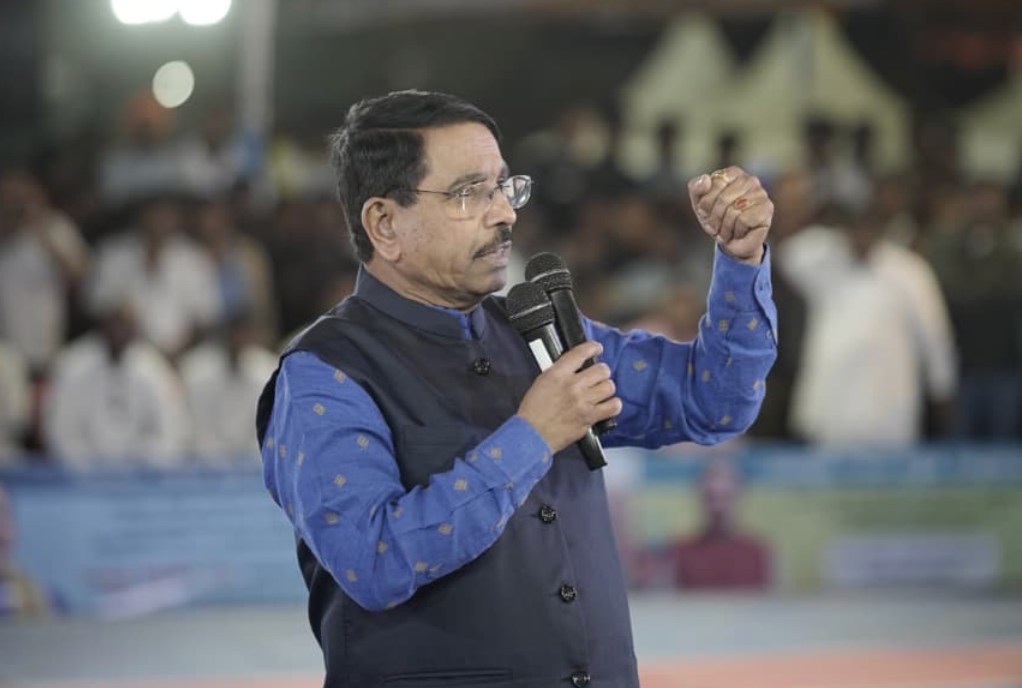


Greater Noida: India marked a record-breaking year in its clean energy journey in 2025, with non-fossil fuel installed capacity rising to 266.78 GW, Union Minister of New and Renewable Energy Pralhad Joshi said. This represents a 22.6 per cent increase over 2024, when non-fossil capacity stood at 217.62 GW, with 49.12 GW of new non-fossil capacity added during the year.
India Marked a Record-Breaking Year in Clean Energy in 2️⃣0️⃣2️⃣5️⃣
India’s clean energy transition gathered unprecedented momentum in 2025. Non-fossil fuel capacity surged to 266.78 GW, marking a 22.6% rise over 2024. Solar power led the charge, jumping to 135.81 GW with a… pic.twitter.com/SFcxkq7WA8
— Pralhad Joshi (@JoshiPralhad) January 10, 2026
Solar and Wind Drive Renewable Energy Expansion
Solar power led the expansion, with installed capacity increasing from 97.86 GW in 2024 to 135.81 GW in 2025, registering a growth of 38.8 per cent. Wind energy capacity also witnessed steady growth, rising from 48.16 GW to 54.51 GW, marking an increase of 13.2 per cent. Together, solar and wind continued to drive India’s renewable energy expansion during the year.
Bioenergy and Small Hydro Add to Clean Energy Diversification
Other renewable energy segments also contributed to the overall growth in 2025. Bioenergy installed capacity reached 11.61 GW, including 0.55 GW from waste-to-energy off-grid projects, reflecting steady progress in clean fuel generation and waste management.
Small hydro power capacity increased to 5.16 GW, supporting decentralised and region-specific renewable energy development. Large hydro power capacity stood at 50.91 GW, including 7,175.6 MW of pumped storage, strengthening grid stability and renewable energy integration.
Policy Leadership Strengthens India’s Clean Energy Pathway
Union Minister Shri Pralhad Joshi said that the record growth achieved in 2025 reflects decisive policy direction, long-term vision and sustained implementation under the leadership of Prime Minister Shri Narendra Modi. He said the progress strengthens India’s pathway towards energy security, climate responsibility and a self-reliant green economy, while moving steadily towards the national target of 500 GW of non-fossil energy capacity by 2030.
The Minister added that Ministry of New and Renewable Energy will continue to work closely with States and stakeholders to further accelerate renewable energy deployment across the country.