

New Delhi: According to Fitch Solutions’ BMI report, India is going to face spike in fertiliser price due to the Strait of Hormuz closure. BMI report says, “In light of the US-Israel war against Iran, a prolonged closure of the Strait of Hormuz will be critically significant for the fertiliser industry, prices and application. The strait is vital not only for the world’s oil supply but also for global fertiliser trade, with the region (Qatar, Iran, the UAE, Bahrain and Saudi Arabia) accounting for around one-third of seaborne fertiliser shipments. We do not see a strong rise in application in Asia as farm profitability remains pressured. Overall, still-high input costs will restrict farm production and fertiliser usage. Asia will remain a top global consumer of fertilisers in the long term.”
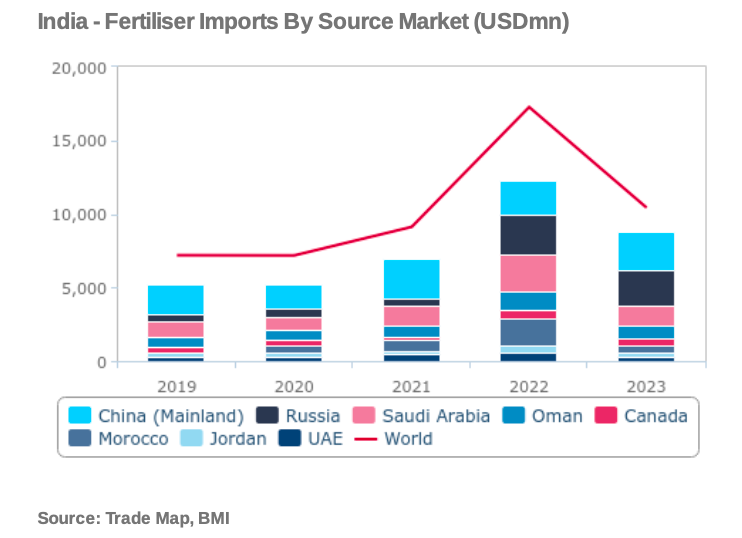
BMI report says, ” India faces the most imminent risk. The timing is particularly critical: while the current disruption falls outside peak import season for several major markets, India’s fertiliser demand window is fast approaching, late March through April, with the peak phosphate production season beginning in June. This means the conflict is occurring during a key import window ahead of both peak application and production periods. India’s corn plantings begin in May, and corn is the country’s most fertiliser-dependent crop. Should the conflict extend beyond one month, we anticipate reduced fertiliser application rates. This risk is compounded by the emerging likelihood of an El Niño event, where reduced fertiliser application amid already stressed growing conditions could significantly impact yields and potentially trigger export restrictions. India could seek increased imports from Russia to bridge supply gaps, but beyond three months, it becomes difficult to see how lost volumes can be meaningfully replaced through ramped-up production elsewhere. At that point, reduced application becomes unavoidable.”
India accounts for 15% of global fertiliser use and 80% of fertiliser use in South Asia. In India, government supports fertiliser purchases by farmers where urea is the main used product.
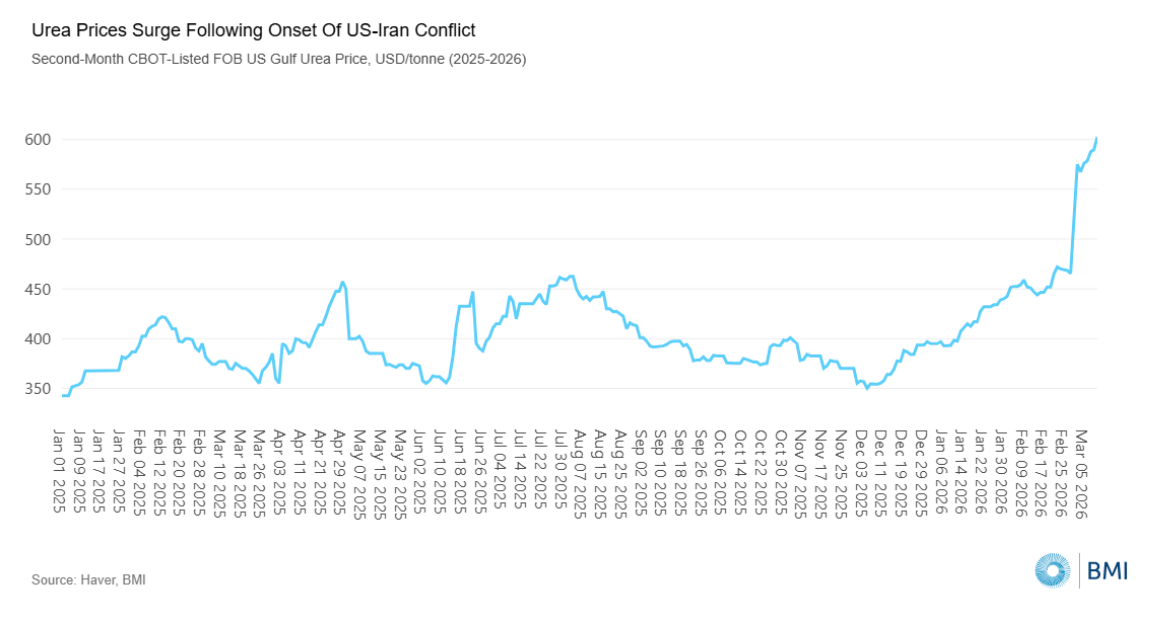
“The administration of Indian Prime Minister Narendra Modi has consistently maintained financial support to the sector with the stated aim of fuelling its continued expansion. Agricultural policies, such as the minimum support prices (MSP) scheme and fertiliser subsidies, are designed to bolster farmer incomes, an important driver of rural economic development, as well as to encourage spending on agricultural infrastructures (which remain patchy) and capital investment in the sector. Government initiatives to limit urea consumption are slowly paying off. Over the long term, we expect India’s fertiliser consumption rates to begin cooling off as the sector matures. The government’s ongoing goal of improving efficiency in the use of fertiliser will also weigh on sales volume growth over the coming years, but this is likely to be partially offset by the likely expansion of crop area. The government is highly likely to continue to provide fertiliser subsidies over the coming years. With state and general elections occurring in 2024, we expect that the government will seek to keep the support of the market’s large agricultural sector and that they will therefore ensure that fertiliser are kept at an affordable price,” BMI report added.