
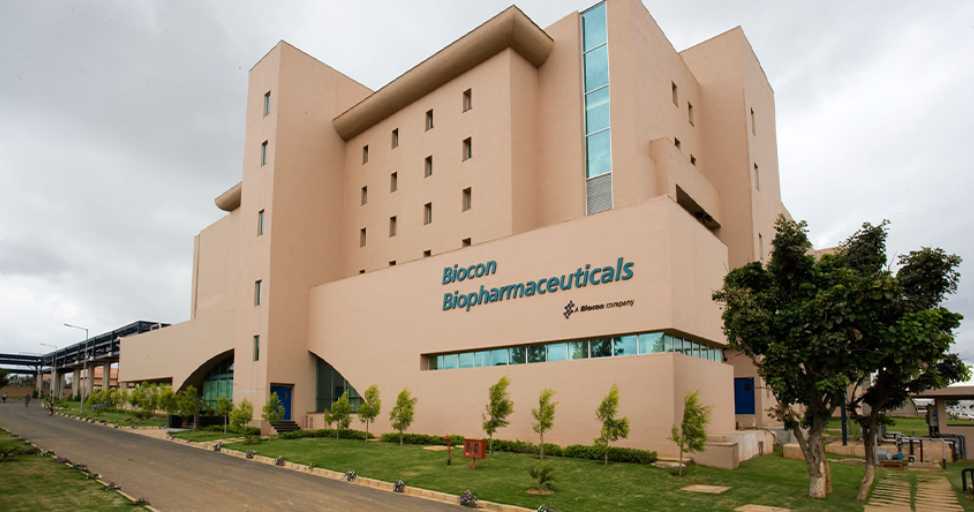


Shreehas Tambe, CEO & Managing Director, Biocon, said, “Findings from these peer-reviewed publications represent an important milestone for our aflibercept biosimilar program as we prepare for our upcoming launch in the United States. Together, these studies demonstrate how our science-led approach continues to expand access to biosimilars for patients.”
Safety and Efficacy of Biosimilar Aflibercept MYL-1701P in Diabetic Macular Oedema: 20-Week Extension Results Following the INSIGHT Pivotal Trial The first manuscript, titled “Safety and Efficacy of Biosimilar Aflibercept MYL-1701P in Diabetic Macular Oedema: 20-Week Extension Results Following the INSIGHT Pivotal Trial,” was published
in the British Journal of Ophthalmology on June 29, 2026.
This publication reports results from a 20-week, multicenter, open-label extension study enrolling participants with Diabetic Macular Edema (DME) who completed the 52-week global Phase III INSIGHT trial. The study evaluated the safety, efficacy and immunogenicity of MYL-1701P in participants who either continued treatment with MYL-1701P or switched from reference aflibercept to MYL-1701P.
The results demonstrated comparable safety, efficacy, and immunogenicity profiles between participants who continued on MYL-1701P and those who switched from reference aflibercept. Safety was assessed by the incidence of ocular and non-ocular treatment-emergent adverse events, while efficacy outcomes included best corrected visual acuity, central subfield thickness and participants who gained ETDRS (Early Treatment Diabetic Retinopathy Study) letters. The findings demonstrate that functional and anatomic outcomes were maintained through the extension period in both treatment groups.
Comparability of Aflibercept Biosimilar with Reference Aflibercept in Diabetic Macular Edema: Subgroup Analysis of the Pivotal Phase-III INSIGHT Randomized Clinical Trial The second manuscript, titled “Comparability of Aflibercept Biosimilar with Reference Aflibercept in Diabetic Macular Edema: Subgroup Analysis of the Pivotal Phase-III INSIGHT Randomized Clinical Trial,” was published on May 18, 2026 in Expert Opinion on Biological Therapy.
This publication presents exploratory subgroup analyses from the Phase III INSIGHT randomized clinical trial comparing MYL-1701P with reference aflibercept in participants with DME. Subgroups were defined based on baseline characteristics including visual acuity, central subfield thickness, age, gender, race, ethnicity, geographic region, glycated hemoglobin, anti-drug antibody status, and prior anti-VEGF therapy in the fellow eye.
The subgroup analyses showed clinically comparable changes in best corrected visual acuity and central subfield thickness between MYL-1701P and reference aflibercept across most subgroups at both early and later timepoints. The findings support clinical equivalence between the aflibercept biosimilar and reference product within the evaluated subgroups.
Dr. Elena Wolff-Holz, Chief Medical Officer, Biocon, said, “The data from these publications reinforce the clinical evidence generated through the Phase III INSIGHT trial, demonstrating consistency of outcomes following a switch from reference aflibercept and comparability across clinically relevant patient subgroups. This adds to the growing body of evidence supporting MYL-1701P as a reliable treatment option for diabetic macular edema.”
Epidemiology:
There are 19.8 million Americans living with age-related macular degeneration (AMD) in the United States.1 Macular degeneration, specifically age-related macular degeneration (AMD), is a significant health concern, especially as the population ages. It is a leading cause of irreversible vision loss in adults over 602. In 2019, an estimated 12.6% of Americans age 40 and older were living with AMD, with 1.49 million (0.94%) living with vision threatening.