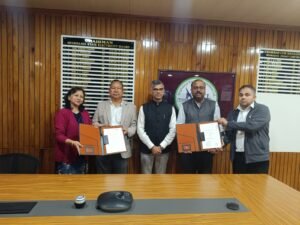
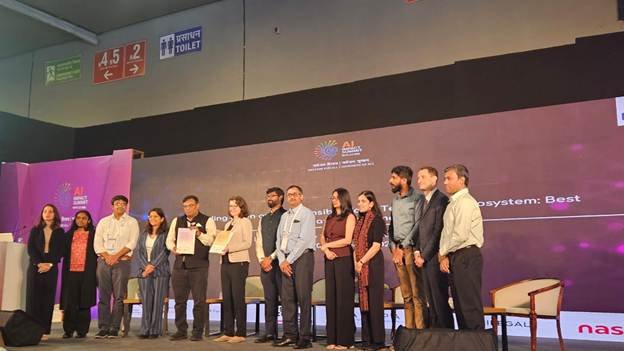


The Policy Report and Developers’ Toolkit were jointly developed by ARTPARK @IISc, Digital Futures Lab and Trilegal with support from Digital India BHASHINI Division and the FAIR Forward – AI for All initiative, implemented by GIZ (German Development Cooperation) funded by the German Federal Ministry for Economic Cooperation and Development (BMZ), bringing together research, technical expertise, and ecosystem collaboration to advance responsible speech technologies in India.
In a linguistically diverse country like India, voice technologies represent a critical layer of digital public infrastructure, lowering barriers to digital access through speech-based applications. However, the development and deployment of speech technologies also raise complex questions around data governance, inclusion, openness, quality, and responsible use. Addressing these challenges requires alignment between policy frameworks, technical practices, and ecosystem-level coordination.
The Policy Report examines key barriers to building open and responsible speech systems in India – from data collection and model development to infrastructure and governance practices. It proposes targeted policy recommendations to strengthen the voice-technology ecosystem, including treating foundational speech datasets as digital public goods, improving openness and representativeness of models, investing in sustainable public infrastructure, and embedding safeguards to prevent misuse while enabling innovation.
The Developers’ Toolkit complements the policy analysis by highlighting key challenges faced by developers working with Indian-language voice datasets and building voice applications. It identifies structural gaps within India’s speech and language technology ecosystem, including uneven data representation, weak quality assurance mechanisms, limited evaluation practices, and fragmented governance structures. Recognising that exclusionary outcomes are often embedded throughout the development lifecycle, the toolkit introduces a layered, lifecycle-oriented approach to building inclusive and robust speech AI systems. It presents practical approaches currently adopted across India’s voice-technology ecosystem to address challenges from product conceptualisation through deployment.