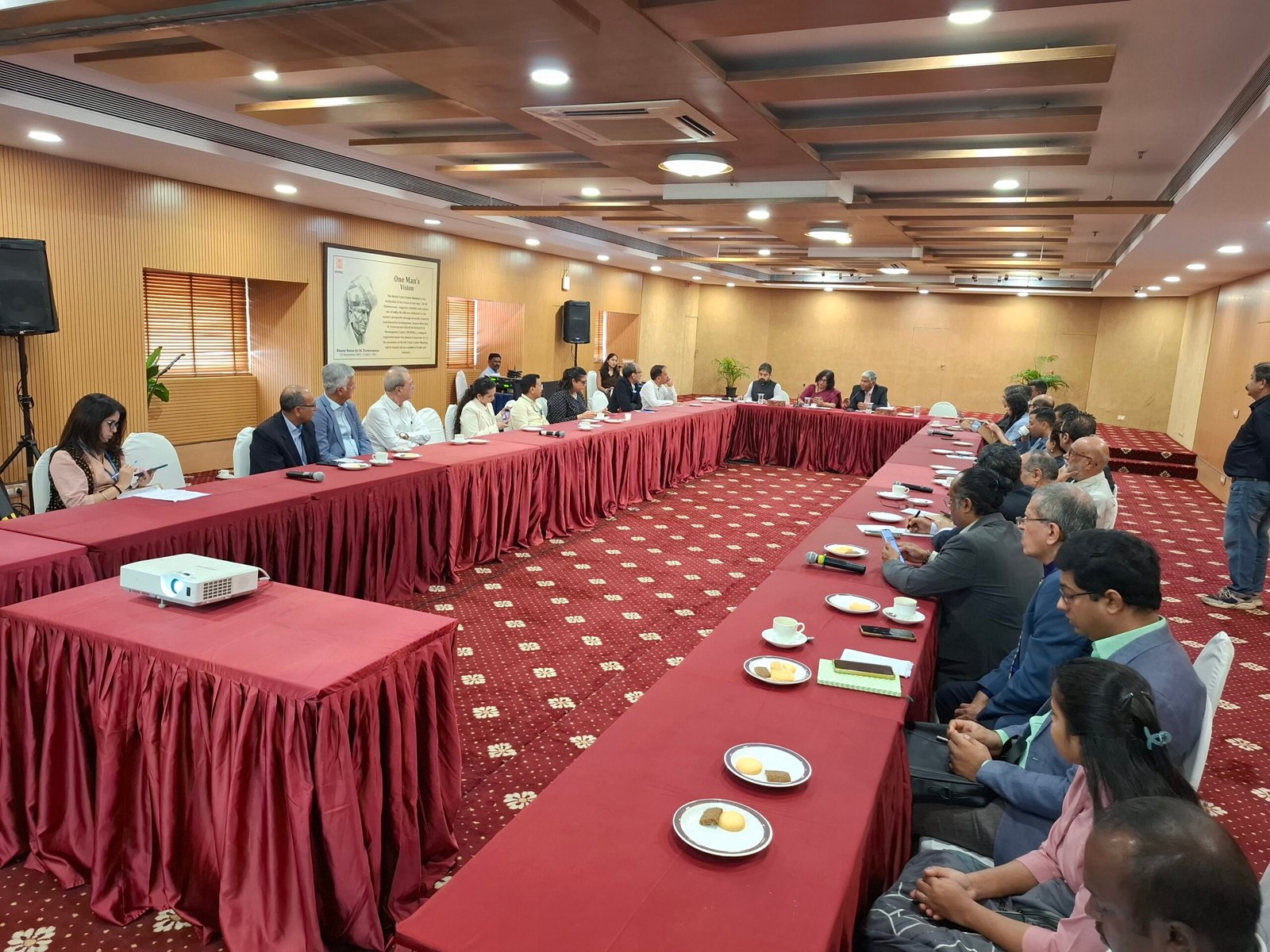


Mumbai: The Energy and Resources Institute (TERI), in collaboration with World Trade Centre (WTC) Mumbai, convened a High-Level Transformative Leadership Roundtable on 28 January 2026 in Mumbai, bringing together senior business leaders, investors, and sustainability practitioners to deliberate on accelerating India’s low-carbon transition while sustaining economic growth.
Held at Centrum Hall, World Trade Centre, Cuffe Parade, the closed-door roundtable focused on the urgency for transformative leadership and collective action in shaping India’s climate and development trajectory—particularly at a time when much of the country’s future infrastructure is yet to be built.
Participants highlighted India’s unique opportunity to leapfrog to cleaner energy, mobility, and industrial systems by rapidly adopting renewable energy, electrification, and digital technologies. While acknowledging India’s significant progress in expanding renewable energy capacity, the discussions underscored the need for scaled-up investments, access to advanced technologies, robust standards and certifications, and deeper collaboration between domestic and global stakeholders.
The roundtable opened with context-setting remarks by Dr Vibha Dhawan, Director General, TERI and Dr Vijay Kalantri, Chairman, World Trade Center, Mumbai and President, All India Association of Industries, who emphasized the importance of aligning business leadership with national and global climate ambitions. Dr Dhawan said, “Ambition today must move beyond scale alone. As India’s clean energy economy expands, so does its demand for materials, minerals, and infrastructure. Resource efficiency and circular economy approaches are no longer optional—they are strategic necessities for energy security, cost stability, and long-term resilience.”
Dr Kalantri observed, “As India moves towards its net-zero target by 2070, our responsibility is to pursue a transformative vision of development where sustainability and economic growth reinforce each other. This transition will be driven by advanced technologies, innovation, and a shared ideology that views climate action not as a constraint, but as an opportunity for long-term, inclusive and sustainable development.”
This was followed by moderated interventions from CXOs and leaders representing industry, finance, impact investing, and sustainability-focused organizations.
Key themes discussed included:
- Interdependencies and low-carbon transition pathways across industry sectors
- Accelerating efforts to scale renewable energy deployment
- The need for credible certifications, standards, and verification frameworks
- The role of banks, impact investors, and alternative asset managers in mobilizing finance
- Harnessing the power of collective action among businesses, governments, researchers, and civil society
Moderating the roundtable discussion, Arupendra Nath Mullick, Associate Director, TERI said, “We invite not just participation, but the collective intellect of our partners to co-create a platform that harnesses the power of networks, expertise, and implementation, while grounding solutions in real-world perspectives.”