


New Delhi: Asia’s long-term energy security will increasingly depend on diversified, reliable and lower-carbon LNG supply. As buyers look beyond traditional sources, Canada is emerging as a compelling long-term supplier due to its proximity to the Asian market, as well as its lower carbon intensity.
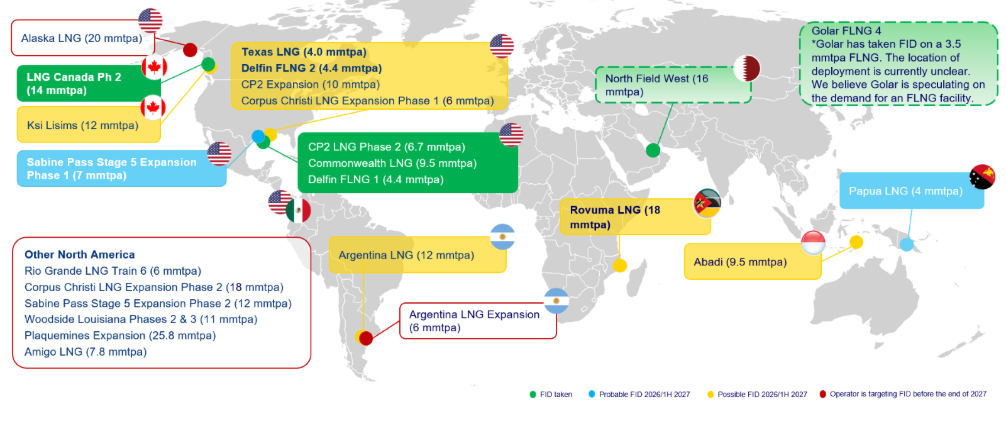
Canada’s LNG sector is entering a new phase of growth. LNG Canada reached a final investment decision on its Phase 2 expansion in September 2026, doubling the facility’s capacity to 28 mmtpa and reinforcing Canada’s potential as a significant long-term supplier to Asian markets. Together with Woodfibre and Cedar LNG which are currently under construction, Canada looks to export 33 mmtpa of LNG by end of this decade.
Even with the addition of projects such as Ksi Lisims LNG, Canada remains well below Prime Minister Mark Carney’s long-term ambition of achieving 100 mtpa of LNG export capacity under his “energy superpower” agenda. Meanwhile, global competition for LNG investment is accelerating as a growing number of projects compete for scarce capital and seek to reach FID. Consequently, Canada’s opportunity to secure a larger position in the next phase of global LNG supply growth may be limited in both time and scale.
In this context, a whitepaper, prepared in collaboration with Energy Asia by PETRONAS and Wood Mackenzie, assesses Canada’s prospects for capturing a greater share of Asia’s expanding LNG demand. It also highlights the evolving needs of Asian buyers and investors, offering insights into the conditions required for LNG-exporting nations to attract investment and successfully advance new projects.
“For Asian buyers, Canada offers something that is increasingly rare in global LNG markets: a combination of resource scale, Pacific Basin access and a short shipping routes,” said Joshua Ngu, Vice Chairman, Asia Pacific at Wood Mackenzie. “That is a compelling proposition. But buyers are also weighing cost, timeline and execution risk against alternatives that are already further advanced. Canada’s resource advantage is real, but realizing its full potential will depend on competitiveness, execution and timely project delivery.”
A structural shift in global LNG markets
Repeated geopolitical disruptions have exposed the risks of overreliance on concentrated sources of supply, prompting Asian buyers to reassess their long-term LNG procurement strategies. As a result, supply diversification across geography, counterparties and carbon intensity has become a strategic priority for governments, utilities and LNG buyers across the region.
According to Wood Mackenzie, Asian LNG demand is expected to double from approximately 260 mtpa today to around 500 mtpa by 2060. Critically, a significant share of this future demand remains uncontracted, creating opportunities for new LNG suppliers to secure long-term market access.
South and Southeast Asia are expected to account for much of the growth in future LNG demand and are likely to be key destinations for new long-term supply agreements. However, many of these markets are highly price sensitive and have limited capacity to absorb sustained high energy costs, despite LNG’s important role in supporting economic growth, industrialisation and energy security.
As a result, buyers are increasingly seeking supply portfolios that balance security, affordability and sustainability. For LNG exporters, competitiveness on delivered cost is becoming just as important as supply reliability and emissions performance.
Canada’s momentum and the competition it faces
The FID for LNG Canada Phase 2 represents an important milestone in Canada’s efforts to expand its LNG export capacity, while Ksi Lisims LNG continues to advance toward a final investment decision and build commercial momentum. However, Canada is competing for both investment capital and access to a rapidly growing, yet very price-sensitive, Asian LNG market.
Competition is intensifying as buyers evaluate long-term LNG offtake opportunities across a growing range of global supply options. In 2026 alone, CP2 LNG, Commonwealth LNG and Delfin FLNG 1 reached FID in the United States, while projects across Africa, Australia and Latin America continue to progress toward sanction.
The contracting and investment decisions made over the next three to five years will help shape Asia’s LNG supply landscape for decades to come.
What Canada needs to do
The white paper identifies four priorities for Canada to derisk projects and attract the scale of capital required:
- Improve cost competitiveness: High labour costs, substantial infrastructure requirements and constraints in the skilled labour pool risk placing Canadian LNG at a disadvantage relative to competing projects globally. Addressing these structural challenges will be critical to improving project economics and maintaining competitiveness in Asian markets.
- Strengthen regulatory certainty: Investors and LNG buyers require predictable, transparent and time-bound permitting and approval processes. Reducing regulatory uncertainty will be essential to improving investor confidence and advancing projects to sanction.
- Develop innovative financing solutions: The scale of capital required for Canada’s next wave of LNG projects may necessitate new financing approaches, including government-supported mechanisms, credit enhancements and public-private partnerships capable of attracting institutional and international investors.
- Deepen government-to-government engagement: Long-term LNG relationships are built not only through commercial agreements but also through strategic partnerships between governments. Strengthening energy diplomacy and economic cooperation with key Asian importing countries can help support investment, facilitate long-term contracting and reinforce Canada’s position as a reliable energy supplier.