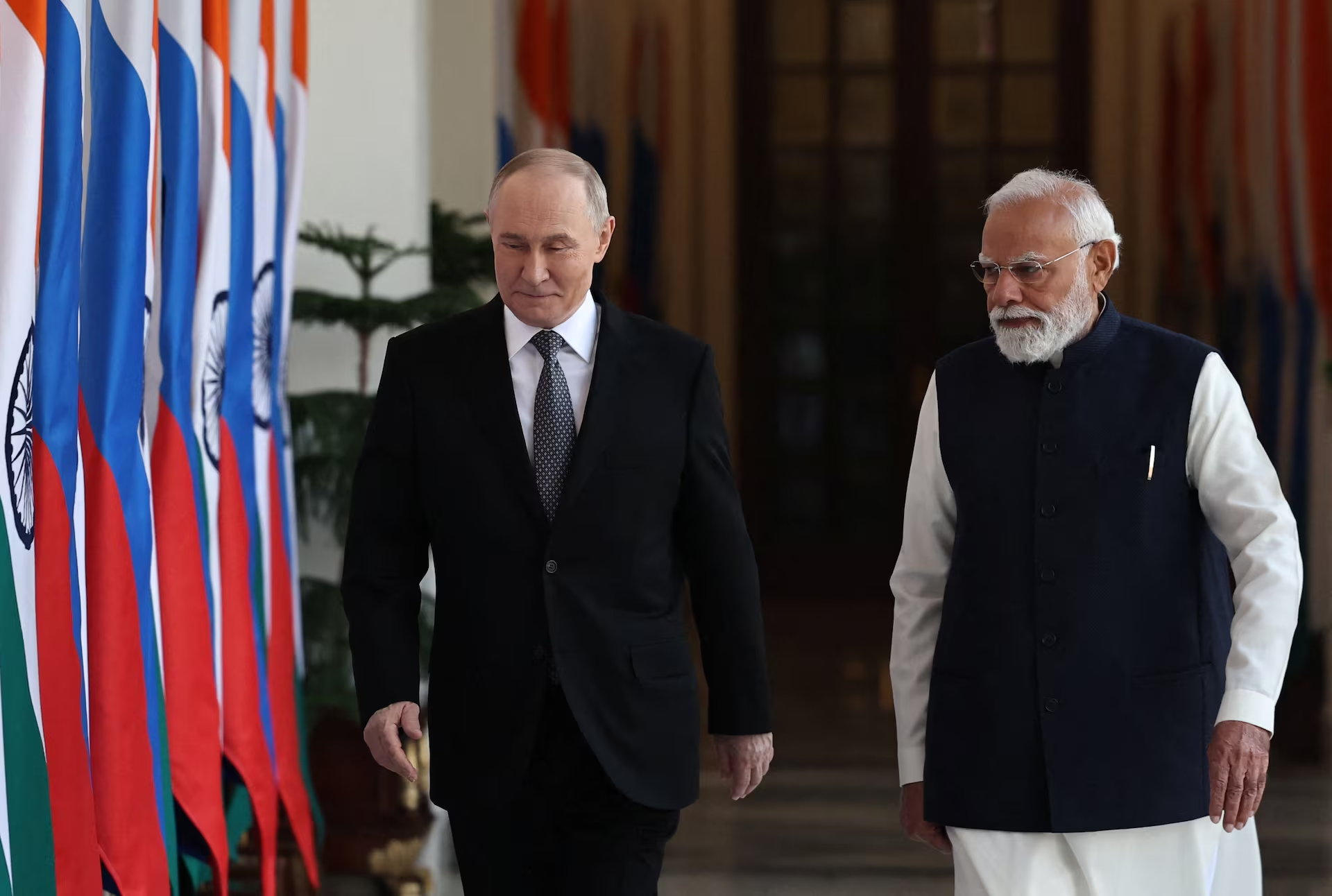


The 23rd India–Russia Annual Summit arrived at a decisive juncture. Moscow remained heavily sanctioned and diplomatically isolated by the West, while New Delhi was navigating retaliatory US tariffs—up to 50% on select Indian exports—meant to signal displeasure over India’s continued intake of discounted Russian crude. What emerged in Delhi was neither defiance nor alignment, but a clear-eyed recalibration of an old partnership for a fractured, multipolar world.
Energy: From Transaction to Lifeline
In recent years, Russia has become India’s largest crude supplier, a development that critics have painted as opportunistic. The Delhi summit recast it as strategic logic.
Putin made the point unambiguously:
“If the United States can purchase our nuclear fuel, why should India not?”
The leaders endorsed an expansive 2030 Energy Cooperation Roadmap covering:
- Long-term crude and LNG supply
- Coal, coking coal and nuclear fuel
- Joint investments in refining and petrochemicals
- Expansion of civilian nuclear collaboration
This is no longer the story of discounted barrels; it is the architecture of long-term energy resilience for an ascending India.
Defence: From Buyer to Co-Creator
India’s military platforms remain significantly Russian-origin, but the Delhi conversations pushed decisively beyond buyer-seller dynamics.
The new emphasis was on:
- Co-development
- Co-production
- High-end technology transfer under Make in India
Russia signalled readiness to deepen cooperation on advanced systems, including potential follow-ons to the S-400, next-generation fighters like the Su-57 lineage, and futuristic weapons technologies. Importantly, both sides addressed delivery delays caused by sanctions, committing to restore timelines and jointly build resilient supply chains.
The shift marks India’s transition from a major importer to a capability-building partner.
Trade Rebalancing: The $100 Billion Blueprint
Bilateral trade touched $68 billion in 2024, overwhelmingly driven by energy imports. The Delhi summit tackled the imbalance candidly and announced a new target: $100 billion by 2030.
The roadmap includes:
- Diversifying Indian exports: pharmaceuticals, machinery, automobiles, electronics, IT services
- Fast-tracking a Free Trade Agreement with the Eurasian Economic Union (EAEU)
- Deepening rupee–rouble settlements—already covering nearly 96% of trade
- Reducing dependence on dollar-denominated channels
- This economic architecture is designed not only for volume but for insulation—from sanctions, supply chain disruptions, and currency volatility.
Expanding Horizons: Fertilisers, Health, Technology, Connectivity, and People Mobility
One of the summit’s most consequential outcomes was the fertiliser agreement between Indian firms (RCF, NFL, IPL) and Russia’s URALCHEM to build a 1.8–2 million tonne urea plant in Russia. This will secure long-term supplies for Indian farmers and guard against global price shocks—an issue that periodically disrupts agricultural planning.
Equally significant was the forward movement on mutual visa-free travel, a long-awaited development that blends strategy with human connection. India and Russia agreed to fast-track negotiations on a bilateral visa-free regime, beginning with group tourism and eventually expanding to broader categories. For two countries looking to deepen economic, educational, and cultural engagement, easing mobility barriers marks a structural shift—one that will invigorate tourism, business exchanges, academic collaboration, and people-to-people trust.
As both sides recalibrate the relationship for the next decade, new domains of cooperation have moved to centre stage:
- Health, pharmaceuticals, and medical research
- Labour mobility, matching India’s talent with Russian workforce needs
- Port logistics, maritime transport, and supply chain resilience
- Artificial intelligence, cyber security, and digital technologies
- GLONASS-based navigation and space cooperation
- Food safety and agricultural technologies
Connectivity efforts—especially the International North–South Transport Corridor (INSTC) and the Chennai–Vladivostok Maritime Corridor—are being revived. Together, these corridors can position India as a pivotal Eurasian logistics hub—cutting transit times, bypassing geopolitical chokepoints, and enabling smoother flow of goods across continents.
The Geometry of Strategic Autonomy
The summit’s timing, coming amid US tariffs and Western criticism, was an unmistakable display of India’s foreign policy clarity.
Western analysts once again attempted to frame India’s engagement as a “tilt” toward Russia. New Delhi’s response was firmly articulated.
Modi stated:
“India is not neutral. India stands for peace.”
This was not a statement on Ukraine alone, but a broader assertion of India’s sovereign right to define national interest. Strategic autonomy is not about equidistance; it is about independent judgment. India can deepen ties with Moscow without undermining relations with Washington or Europe.
This is the unapologetic geometry of Indian foreign policy in 2025:
Engage all. Align with none. Stand firm on interests.
The Delhi Signal: Partnership on New Terms
The signing of over 29 agreements across defence, energy, fertilisers, health, technology, and connectivity reflected a mature relationship entering a new phase. No longer tethered to Cold War nostalgia, the partnership is being rebuilt on pragmatic foundations for a changing global order.
For India, the visit reaffirmed the freedom to navigate multiple strategic arenas.
For Russia, it underscored that among its global partners, India remains one of the most stable and reliable.
Putin himself captured the moment:
“Under Prime Minister Modi, India is pursuing an independent and sovereign policy with remarkable results.”
Conclusion: Charting the Road to 2030
Putin’s Delhi visit signalled an evolution of India–Russia relations—from historical reliance to strategic renewal. Energy security, industrial collaboration, defence co-development, technological partnerships, and connectivity corridors now define the agenda.
In an era of sanctions, alignments, and geopolitical pressure, India’s greatest strength is its sovereign path. The road to 2030 will be shaped not by inherited alliances but by choices grounded in national interest.
India is not choosing sides. India is choosing itself.
About the Author
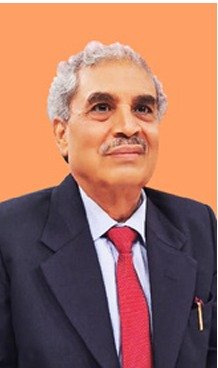
Hridaya Mohan is a regular Columnist with a renowned Indian daily “The Hitavada” and some other newspapers / magazines internationally. Superannuated as Executive Director, Steel Authority of India Ltd. (SAIL), he is Senior Adviser, Metallon Holdings Pvt. Ltd. presently. He headed SAIL office at Beijing as Chief Representative (China & Mongolia) for six years. He has published and presented seventeen papers globally. Recipient of “Sir M Visvesvaraya Gold Medal”for one of his papers, “Benchmarking of Maintenance Practices in Steel Industry” from The Institution of Engineers (India), he was awarded with “Scroll of Honour” for the excellent contributions to Engineering fraternity from IE(I), Bhilai, “Jawahar Award” for leadership excellence in SAIL and “Supply Chain Leader – 2017” award from IIMM.